Inheritance in C++
In this blog, I’m explaining about Inheritance in C++ Inheritance is the ability to create a class from another class, the “parent” class, extending
Pure virtual function C++
In this blog, I’m explaining about Pure virtual function in c++A pure virtual function is a function that has the notation “=0” in the declaration of
Pointer in c++
In this blog, I’m explaining about Pointer in c++ PointerPointer is a variable that holds a memory address. This address is the location of another
Overloading and Overriding in C++
In this blog, I’m explaining about Overloading and Overriding in C++ Overloading The same method name with different type of parameters in a cla
Triggers in SQL
In this blog, I’m explaining about triggers in SQL Triggers are database object. Basically these are special type of store procedure that are automa
LINQ Joins in C#
In this blog, I’m explaining about joins in LINQ in .NetThere are different types of LINQ joins.1.Inner join2.Left join3.Cross join4.Group joinInner j
Reflection in C#
In this blog, I’m explaining about Reflection in .Net Reflection is the process by which program can read its own metadata. Reflection provides obje
Encryption and Decryption in .NET
In this blog, I’m explaining about Encryption and Decryption in .NetEncryption is the process of translating plain text into something that appears to
Partial Classes in C#
In this blog, I’m explaining about the partial classes in C#. A partial class allow a single class to be divided into two separate physical file.Duri
Difference between Interface and Abstract Class in .Net
Difference between Interface and Abstract Class in .NetIn this blog, I’m explaining about interface and abstract class in .NetAbstract ClassAbstract
Common Type System in .Net
In this blog, I’m explaining about CTS in .NetCTS defines a collection of data types, which are used and managed by the run time to facilitate cross-
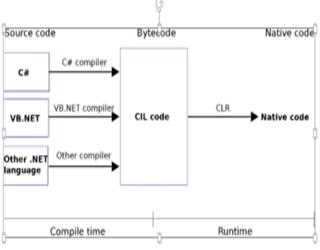
Common Language Runtime in .Net
Normal0falsefalsefalseEN-USX-NONEX-NONE /* Style Definitions */ table.MsoNormalTable {mso-style-name:"Table Normal"; mso-tstyle-rowband-size:0