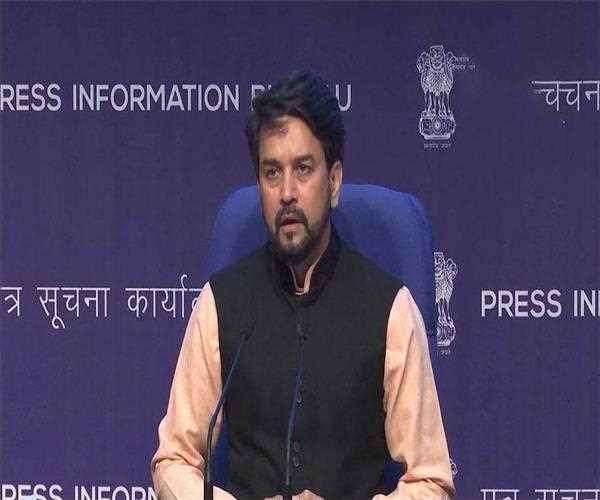
More than 600 social media accounts of the government hacked since 2017: Anurag Thakur. Union Minister Anurag Thakur said in Lok Sabha on Tuesday.
Highlights
- To enhance Cybersecurity, CRET-In was set up
- CRET-In issued a total of 68 advisories for organisations
- CRET-In used to operate an automated cyber threat exchange platform
Also Read: YouTube Channels, Websites ordered to be Blocked by I&B Ministry for Spreading Anti-India Info
Anurag Thakur, the Minister of Information & Broadcasting Ministry in Lok Sabha on Tuesday said in a response to a question from the opposition on the hacking of the Government’s Twitter handles and e-mail accounts, Thakur said since 2017, more than 600 accounts have been hacked.
In a written reply, Thakur said 175 accounts hacked in 2017, 114 in 2018, 61 in 2019, 77 in 2020, 186 in 2021, and 28 this year so far have been hacked.
He said the information regarding the hacking was available by the Indian Computer Emergency Response Team (CRET-In) to the Ministry of Electronics And Information Technology (MeitY).
Anurag Thakur said “On observing compromise of websites/e-mail/Twitter accounts, CERT-In notifies the affected entities along with the remedial actions to be taken. CRET-In coordinates incident response measures with affected entities, service providers, sectoral Computer Security Incident Response Teams (CSIRTs) as well as Law Agencies,” the minister said.
Thakur, while responding to the query told that measures have been taken to prevent such a hack. The minister said to enhance cybersecurity, CRET-In was set up. It issued several guidelines for using the technology and how to avoid such addresses that lead to cyber-attacks.
CRET-In already has been issued 68 advisories to organisations so that the hacking practices could be mitigated.
Minister also added “CRET-In has set up the National Cyber Coordination Centre (NCCC) to generate necessary situational awareness of existing and potential Cyber Security threats. Phase 1 of NCCC is operational,” Thakur said.
Also Read: Anti-India 22 YouTube Channels Blocked in India by the Ministry of Information and Broadcast