REPLACE in an UPDATE statement
This article covers using the REPLACE function to selectively replace text inside a string in SQL Server. The REPLACE function is easy to use and very handy with an UPDATE statment.
Tricks to Replace SELECT * with Column Names
You might have heard many times that one should not use SELECT * as there are many disadvantages to the usage of the SELECT *. I also believe that the
Transaction in SQL Server
In .NET environment we can define transaction boundary by Transaction object. 1. If you are using SqlClient (namespace System.Data.SqlClient) Managed
CURSOR in SQL Server
A Cursor is a database object that represents a result set and is used to manipulate data row by row. When a cursor is opened, it is positioned on a row and that row is available for processing.
Stored Procedure in SQL Server
Stored procedures are a powerful part of SQL Server. They can assist programmers and administrators greatly in working with the database configuration and its data.
Difference between Function and Stored Procedure in SQL SERVER
SQL Server functions and stored procedures offer similar functionality. Both allow you to create bundles of SQL statements that are stored on the server for future use.
Clustered – Non Clustered Indexing In Sql Server
Indexes in general increase performance by reducing I/O. Without indexes, SQL Server would always have to read all of the rows in a table to find the subset of rows that have the values specified in joins or WHERE clauses
Difference between TRUNCATE & DELETE statement in SQL Server
Truncate and Delete both is used to delete data from the table. Both these commands will only delete the data of the specified table; they cannot remo
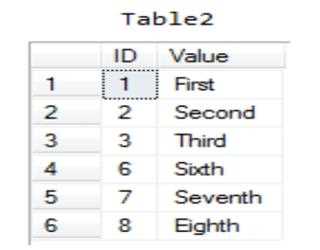
JOIN in SQL Server
SQL JOIN's are used to query data from two or more tables, based on a relationship between certain columns in these tables.SQL joins are used to combi
CASE statement in SQL Server
The SQL Server CASE statement is a conditional statement that returns a single value based on the evaluation of a statement. CASE expressions can be u
Wildcards Operators in SQL
SQL wildcards can substitute for one or more characters when searching for data in a database. SQL wildcards must be used with the SQL LIKE operator w
Difference between Stored Procedure and Function
In this blog I am going to explain the basic difference between Stored Procedure and Function.Stored procedures:Have to use EXEC or EXECUTE. Return