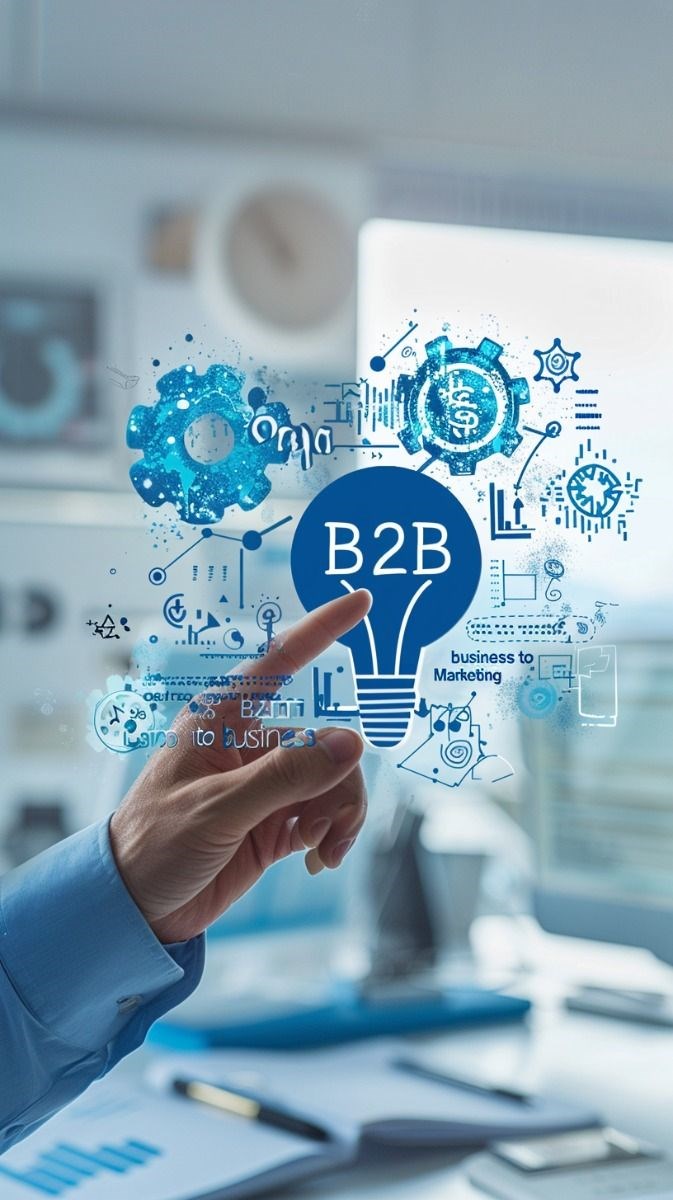
AI in the field of B2B marketing is proving to be influential as it helps in making right decisions based on the data, customer data and campaigns. It helps to automate many processes, to predict clients’ activity, and to improve the productivity of lead generation in companies. The present blog covers the Ten Strategies for Applying AI in B2B Marketing to help you be competitive enough in the business world.
1. Personalized Content Delivery
AI considers the information about Consumers to ensure that content is created based on their preference. Using machine learning, three fields can be improved, including email campaigns, recommendations of goods, and website personalization. Engagement is always a good thing, especially when it leads directly to a greater conversion rate due to the satisfaction of some needs. This is because it individualizes the customer, thus creating a positive perception of the brand, making it easy to secure the business of the B2B client.
2. Predictive Analytics for Lead Scoring
Business use of AI in lead management is important since analytical tools enable one to automatically enhance the identification of high-quality leads based on past performance and behavior. Leads can be ranked by its chance of converting to sale which helps the sales team give focus to their actions. This cuts cost since marketing is only directed towards the most probable customers hence increasing the return on investment and increasing the rate of sale.
3. Chatbots for Instant Customer Support
Chatbots that are powered by Artificial Intelligence enable user support and assistance 24/7 to address their concerns or questions, facilitate issue resolution, or inform them regarding the product or service they want to purchase. These virtual assistants are able to incorporate NLP technologies that produce human-like experiences and increase satisfaction among the customers. To B2B marketers, chatbots enhance the process of communication, ensure quick response time and save time for other labor intensive procedures.
4. Automated Email Marketing Campaigns
Email marketing is an application of AI to market emails through sorting the targets into different audiences and choosing the best times of sending the messages, and creating persuasive subject lines to the intended audiences. An example of such an application is AI in the use of e-mail where applications learn their users’ habits to send a suitable message to a member when he or she is the most responsive. This leads to subsequently higher open rates, click-through rates, and overall effectiveness of the email marketing campaigns, which makes the latter one of the most effective tools for handling B2B leads.
5. Enhanced Ad Targeting with AI
Machine learning helps to enhance ad relevance as the information about the exposed individuals has the highest possible quantity. It automatically determines profitable ad placements, and daily, hourly, and minute-by-minute budgets and creatives. For the B2B marketers it is about reaching those buying decisions with accuracy, avoiding flushing money down the drain on the ads that are not going to produce results, and driving the right traffic to their websites.
6. Content Creation and Optimization
Generation of blog posts, social media posts, product descriptions, etc. are some of the most common uses of AI tools such as GPT-4. They also allow for suggestions of keywords and enhance its readability for the purpose of SEO. This reduces time and makes sure that its content is engrossing to the target traffic and its site is viewed as the market specialist.
7. Sales Forecasting with AI
Marketing involves the identification of trends and other factors that used to forecast sales so as to ensure accurate results. It makes B2B corporations understand the demand patterns in relation to stock, distribute its resources, and set appropriate revenue targets. Numerical forecasting prevents companies from falling short or overestimating their demands that allows its steady growth.
8. Dynamic Pricing Strategies
AI also makes pricing dynamic through looking at competitor prices, demand and the customers. This helps in maintaining the right price which implies that even with the profit the prices are maintained low. For the B2B marketers, dynamic pricing strategy assists them in attracting more clients and maintaining the existing ones, because of the feasibility of the prices they set during the business operations.
9. Social Media Listening and Sentiment Analysis
Social media analytics is the use of AI tools that observe the various social media platforms in order to detect the many mentions of brands, the attitude of customers as well as tendencies. This comes in handy when it comes to gaining understanding on the side of the customer’s fence, something that assists B2B marketers in the process of marketing. It is possible to achieve this by satisfying the given concerns and capitalizing on feedback that is positive in nature as it will help in developing a good reputation in the market among the audience.
10. Account-Based Marketing (ABM) Optimization
AI improves ABM through the discovering target accounts, the prognosis of their requirements, and the customization of the approach. They analyze information from several points of contact to design relevant campaigns for deploying to organizational decision-makers. It also makes sense since it is less costly to sell to major customers than trying to convince new, unknown ones to purchase its products.
Conclusion
No longer is AI something that is in the future, it is already a necessity in the realm of B2B marketing to stay relevant. The advancements of the Four Frontiers of AI include quick and relevant recommendations based on the customers’ online behavior, chatbots for pre- and post-purchase customer care, and dynamic pricing for supply chain and demand chain management. Thus, implementing these 10 trends of artificial intelligence in your marketing campaigns is a way to achieve higher effectiveness and results in the modern B2B environment.


Leave a Comment