MapReduce Driver Class:
Although the mapper and reducer implementations are all we need to perform the MapReduce job, there is one more piece of code necessary in MapReduce:
Pig Data Types in Hadoop
We have already seen the Pig architecture and Pig Latin Application flow. We also learn the Pig Design principle in the previous post. Now it’s time t
Pig Design Principles in Hadoop
Pig Latin is the programing platform which provides a language for Pig programs. Pig helps to convert the Pig Latin script into MapReduce tasks that can be run within Hadoop cluster.
Introduction to Pig in Hadoop
Java MapReduce programs and the Hadoop Distributed File System (HDFS) provide us with a powerful distributed computing framework, but they come with one major drawback
YARN’s Resource Management
Yarn’s Resource ManagerThe most key component of YARN is the Resource Manager, which governs and maintains all the data processing resources in the Ha
Hadoop File System Commands: ls Command Output Analysis
In my previous post, I have explained various Hadoop file system commands, in which I also explained about the “ls command”. I have written the syntax
HDFS Architecture in Hadoop
The core concept of HDFS is that it can be made up of dozens, hundreds, or even thousands of individual computers, where the system’s files are stored in directly attached disk drives.
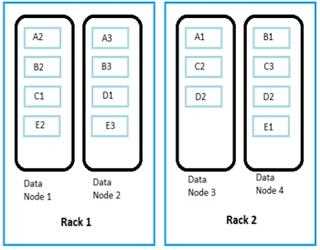
Data Replication in Hadoop: Slave node disk failures (Part -2)
In Part -1, I explained about Data Replication in Hadoop: Replicating Data Blocks (Part – 1) now in this post I am trying to explain about Slave node
Three modes of Hadoop Cluster Architecture
Hadoop is primarily structured and designed to be deployed on a massive cluster of networked systems or nodes, featuring master nodes (which host the
Why we need Map-Reduce in Hadoop?
After we have stored piles and piles of data in HDFS (a distributed storage system spread over an expandable cluster of individual slave nodes), the f
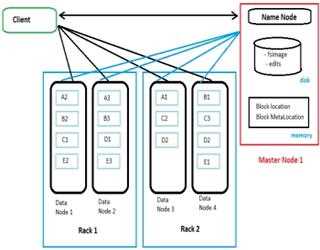
Writing and Reading Data from HDFS
Writing dataFor creating new files in HDFS, a set of process would have to take place (refer to adjoining figure to see the components involved):1.The
HDFS Federation and High availability
Before Hadoop 2 comes to the picture, Hadoop clusters were living with the fact that Name Node has placed limits on the degree to which they could scale.