Arrays in Java: Cloning an Arrays (Part-7)
To make a copy of an array, we call the clone method on the array object. This is illustrated in this implementation:
Arrays in Java: Determine Length of Arrays (Part-6)
When we declare an array in Java, it is treated as an object of an internal class that defines useful attributes and methods.
Arrays in Java: Non-Rectangular Arrays (Part-5)
So far we have seen the declaration and use of rectangular arrays. Java allows us to create non-rectangular arrays.
Arrays in Java: Multidimensional Arrays (Part-4)
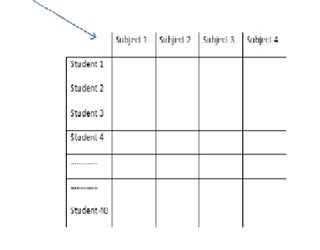
Multidimensional arrays, as the name suggests, contain more than one dimension. You can create two-dimensional, three-dimensional, and n-dimensional arrays in Java (where n is any natural number).
Arrays in Java: Array Initializations (Part-2)
In my previous post, we have already learned how to declare an array, allocate the space for its elements, and how to modify and access its elements. Now we learn how to initialize a java array.
Arrays in Java: Part 1
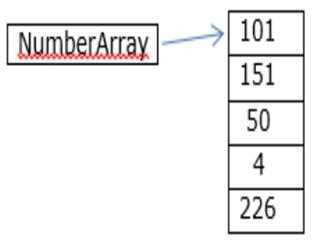
We create arrays when we want to operate on a collection of variables of the same data type or pass them all around together.
Arrays in Java: The for-each loop (Part-3)
In my previous posts, we have seen how to declare an array, allocate the space for its elements, and how to modify and access its elements.
Arrays in Java: Array Initializations (Part-2)
In my previous post, we have already learned how to declare an array, allocate the space for its elements, and how to modify and access its elements. Now we learn how to initialize a java array.
Java SE 8
In 2014, Oracle Corporation released Java 8 on 18 March, which was another milestone release for the Java ecosystem.
Java SE 7: Codename Dolphin
Java SE 7 was released on 7 July 2011. Java SE 7 is the major release to the Java SE platform, which came a long time after its previous release
J2SE 5.0 and J2SE 6
J2SE 5.0 was released on 30th September 2004. Developed under JSR 176, Tiger added a number of significant language features, including the for-each loop, generics, autoboxing, and var-args.
J2SE 1.4: Codename Merlin
Previously we have seen JDK 1.0 and its features. We also examine the JDK 1.1 release and some its major API’s and classes.