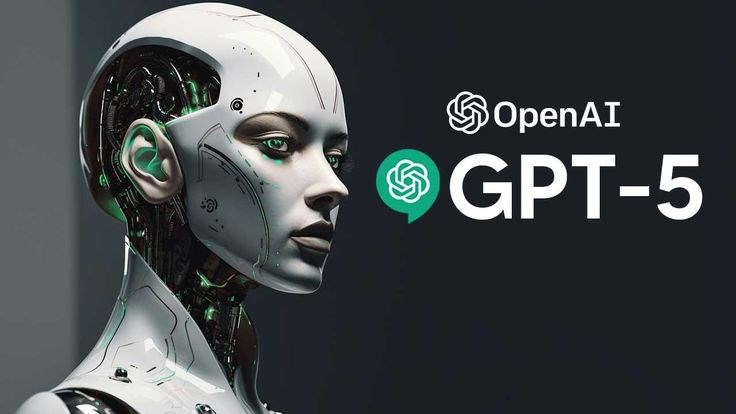
GPT-5 will be announced by OpenAI in August. It is the next-generation model that is much more superior to GPT-4 in essential features. Significant improvements are devoted to the reasoning, multimodal processing, and real-time capability. The publication will affect the spheres of healthcare, education, and creative spheres.
Highlights:
- GPT-5 achieves near-human contextual reasoning for complex tasks.
- It integrates audio, visual, and text inputs seamlessly.
- The model reduces factual errors significantly.
- Real-time learning allows GPT-5 to adapt during interactions.
- Enhanced safety protocols automate compliance with AI standards.
GPT-5 is a dynamic neural system that allows a logical chain of thinking resembling those of humans. This enables it to scan intricate queries such as medical or legal situations with a great level of precision. There are significant increases in abstract reasoning as demonstrated by testing. GPT-5 is able to thread together coherent thoughts, which is something the predecessor was not able to do.
GPT-5 handles text, image, audio, and video on a single platform. GPT-5 provides a synthesis of mixed inputs that the users can submit, like a diagram with verbal explanation and turns them into useful insights. This makes the boundaries between data forms erasable and easily applicable to education and design.
The GPT-5 uses a real-time ethical calibration algorithm, comparing the output to guidelines as it is used. It has the adaptive learning aspect, which improves the responses depending on the current input of the user without any manual correction. The advances improve safety and flexible interactions.