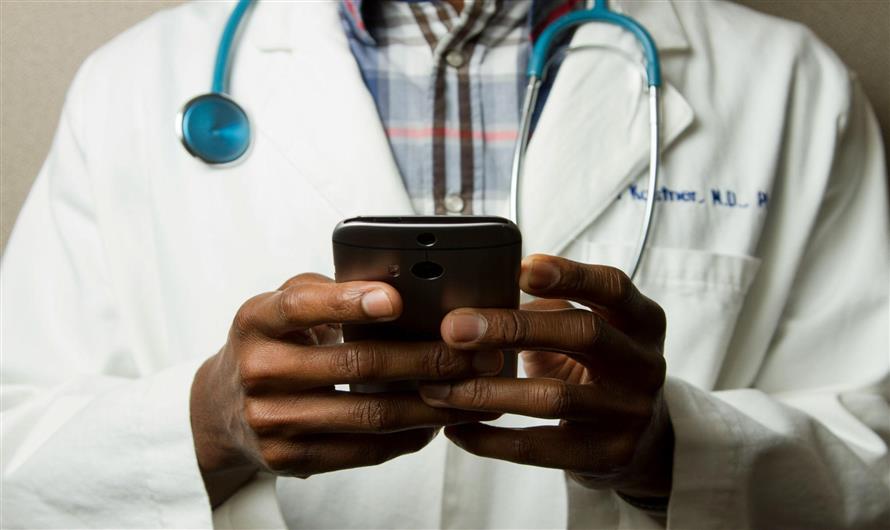
Artificial intelligence stopped being a futuristic concept — it's already working in hospitals, helping doctors diagnose diseases and even predicting epidemic outbreaks. According to Gartner, by 2025, over 40% of healthcare facilities will implement AI solutions to improve patient services. Public healthcare faces countless challenges: overcrowded emergency departments, staff shortages, growing system burden from an aging population. At the same time, machine learning technologies open new possibilities for process optimization, cost reduction, and quality improvement in medical care. This article examines specific examples of how AI in public sector healthcare changes the approach to patient services — from automating administrative processes to personalized treatment plans. We'll discuss real technologies already working in leading medical systems worldwide and find out why implementing these innovations in public institutions happens slower than in private clinics.
Lightning-Fast Diagnostics: Computer Vision in Medicine
When Google Health presented its mammogram analysis system in 2020, the results impressed even skeptics. The algorithm detected breast cancer more accurately than six experienced radiologists, reducing false-positive results by 5.7% in the US and 1.2% in the UK. This isn't just statistics — it's thousands of women who avoided unnecessary stress and unneeded biopsies.
Computer vision changes the game in medical imaging. DeepMind from Alphabet trained an AI to analyze 3D eye scans and detect over 50 eye diseases with 94% accuracy. The system works with retinal tomographic images and can recognize early signs of diabetic retinopathy or age-related macular degeneration — diseases that lead to blindness if left untreated.
Such breakthroughs illustrate how transformative artificial intelligence can be when combined with advanced IT services and solutions for US public sector initiatives — driving innovation not only in healthcare but across all areas of public service.
Real Implementations in Public Healthcare Facilities
NHS in the UK launched a pilot program using AI systems to analyze chest X-rays in four London hospitals. Technology from Annalise.ai, developed by an Australian company, analyzes images in seconds and identifies 124 different pathologies — from pneumonia to rib fractures. Doctors receive a preliminary report before they even manage to examine the image thoroughly themselves.
In Singapore, the national healthcare system integrated SELENA+, an AI platform for diabetic retinopathy screening. Since implementation in 2017, the system has analyzed over 100,000 fundus scans, allowing ophthalmologists to focus on complex cases instead of routine review of normal results.
California's public clinic network Kaiser Permanente uses AdvancedMD to analyze lung CT scans. Doctors note that AI in public sector healthcare helps detect small nodules that the human eye might miss due to fatigue or insufficient contrast in the image. The system works as an extra pair of eyes, marking suspicious areas for further detailed examination by a specialist. Many public healthcare systems already turn to specialized IT services and solutions for US public sector.
Chatbots That Actually Understand Pain
Remember your last call to a clinic reception desk. Busy line, long waits, an irritated nurse forced to answer dozens of identical questions daily. Now imagine these routine inquiries answered by a smart assistant that works around the clock and never loses patience.
Babylon Health created a chatbot that consults over two million users in the UK through NHS. Their system conducts primary diagnostics using a database of millions of medical records and clinical cases. A patient describes symptoms in natural language, and the algorithm asks clarifying questions — exactly as an experienced doctor would during an examination.
Smart Triage Instead of Long Queues
Cleveland Clinic launched a virtual assistant that helps patients determine the urgency of their problem. The system analyzes symptoms and recommends:
- Immediately call emergency services
- Schedule an appointment within 24 hours
- Wait for a routine examination
- Try home treatment with specific recommendations
This reduced the emergency department load by 15%. People with truly critical conditions receive help faster, and those who can wait don't waste time in crowded waiting rooms.
Stanford Health Care integrated a voice assistant for post-operative monitoring. Patients after discharge receive daily calls from an AI system that checks their condition, asks about pain, temperature, and complications. This allowed detecting problems 3-4 days earlier, when they're still easily treatable.
Predictive Analytics: Anticipating Disease Before It Starts
AI in public sector healthcare is most impressive in the field of prediction. Imagine a doctor who can predict a heart attack weeks before it happens, or epidemiologists who see an outbreak before the first patients hit the hospital.
Epic Systems, a company serving electronic medical records for over 250 million patients, developed an algorithm to predict sepsis. This systemic infection kills about 270,000 Americans annually, often because it's detected too late. Epic's system analyzes vital signs, lab results, and medical history in real-time. When risk exceeds a certain threshold, nurses immediately receive alerts — often 6-12 hours before sepsis would become clinically obvious.
From Data to Lives
Geisinger Health System in Pennsylvania uses machine learning to identify patients at high risk of readmission within 30 days after discharge. The algorithm considers over 150 factors — from primary diagnosis to socioeconomic status, availability of transportation for doctor visits, and family support. High-risk patients receive an intensive follow-up program — nurse phone calls, home medication delivery, and faster follow-up visits. Result: 12% reduction in readmissions.
Johns Hopkins created the Targeted Real-time Early Warning System (TREWS) for intensive care units. It analyzes data from bedside monitors, lab results, and medical notes, predicting critical events:
- Sharp deterioration in respiratory function
- Blood loss
- Acute kidney failure
- Cardiac arrhythmias
Early detection of these conditions increases a patient's survival chances by 20-30%. In acute kidney failure cases, timely intervention can save organ function and spare the patient years of dialysis.
Fighting Administrative Chaos
Know how much time an American doctor spends on paperwork? American Medical Association research showed it's almost two hours for every hour spent with patients. Doctors turned into clerks who fill out forms, click buttons in electronic systems, and fight insurance company bureaucracy.
Nuance Communications (bought by Microsoft in 2021 for $19.7 billion) created Dragon Medical One — a voice recognition system specifically for medics. A doctor simply talks during an examination, and AI converts their words into a structured medical record, automatically filling required fields in the electronic chart. Recognition accuracy is 99%, even accounting for complex medical terminology and various accents.
Automation That Actually Saves Time
AI in public sector healthcare also helps with the dullest part of medical work — coding diagnoses and procedures for insurance companies. This is critically important for public medical facilities that receive funding based on these codes.
3M Health Information Systems developed an automatic coding system that analyzes medical records and assigns ICD-10 codes (International Classification of Diseases). ICD-10 has over 70,000 different codes — from a common cold to exotic tropical infections. Coding errors can cost a hospital thousands of dollars in unreceived reimbursement. AI does this work more accurately and faster than specially trained medical coders.
Mount Sinai Health System in New York uses Olive AI — a "digital worker" that automates routine processes:
- Verifies patient insurance coverage
- Sends forms for pre-authorization of procedures
- Tracks claim status
- Reminds patients about appointments via SMS
This freed administrative staff to solve more complex issues that truly require human attention and empathy.
Personalized Medicine: Drugs Created for You
The standard treatment approach — prescribing all patients with a certain diagnosis the same protocol — doesn't always work. What helped your neighbor might not work for you due to genetic differences, other chronic diseases, or even gut microbiome characteristics.
IBM Watson Oncology analyzes an oncology patient's medical history along with data from hundreds of thousands of clinical cases and scientific studies. The system proposes individualized treatment options, ranking them by probability of success for this specific patient. In some cases, Watson finds treatment schemes a doctor might not consider — simply because it's physically impossible to constantly track all new research and clinical protocols published daily.
From Genes to Prescriptions
Mayo Clinic launched a program where AI helps select the right medication dose and type based on a patient's genetic profile. This is especially important for drugs with a narrow therapeutic window — for example, anticoagulants (blood thinners). Too little and the drug doesn't work, too much and there's a risk of dangerous bleeding. Genetic variations in liver enzymes can change drug metabolism rates by ten times.
Tempus, a company founded by Eric Lefkofsky (who also created Groupon), builds the largest library of clinical and molecular data in oncology. Their platform compares a patient's tumor genome with a database containing information about how other patients with similar genetic profiles responded to different treatments. This avoids trial and error when a patient spends months on ineffective chemotherapy with severe side effects.
Remote Monitoring: Hospital in Your Pocket
Ochsner Health in Louisiana created a Remote Patient Monitoring program for heart failure patients. Result: 44% fewer hospitalizations.
Sensors That See the Invisible
Biofourmis developed the Biovitals platform, which uses a wearable patch for continuous monitoring of 20 different biomarkers — from heart rate to rhythm variability, skin temperature, and breathing rate. Their AI learned to recognize patterns that precede critical events. For example, 2-3 days before developing a respiratory infection, the algorithm can notice subtle changes in heart rate variability and temperature — signs that the immune system started fighting.
Veterans Affairs, the American veterans' medical service system, implemented a monitoring program for diabetes patients. Over 100,000 veterans use network-connected glucometers. If sugar levels consistently exceed the target range, the system automatically initiates a video consultation with an endocrinology nurse. This reduced diabetes complications — such as diabetic foot, which often leads to amputation.
Implementation Challenges: Why Public Hospitals Lag Behind
Public healthcare faces unique problems in implementing AI in public sector healthcare.
Obstacles on the Path to Innovation
- Outdated Infrastructure: Many public hospitals still use electronic medical systems created 15-20 years ago.
- Data Fragmentation: Patient data is scattered across different systems that don't communicate with each other.
- Specialist Deficit Implementing and maintaining AI systems requires specialists who understand medicine, IT, and machine learning simultaneously. Such people are rare and expensive. Public institutions can't compete with the salaries offered by tech companies.
- Resistance to Change Medical workers who've been overworked for years often perceive new technologies as an additional burden rather than help. Training, workflow adaptation, and time to trust AI recommendations are needed.
Ethical Dilemmas and Algorithm Bias
An algorithm isn't a neutral mathematical tool. It learns from human-created data and can inherit our biases. In 2019, research published in Science found that a widely used algorithm for determining patients needing additional medical care systematically discriminated against Black patients. At the same disease level, white patients received higher risk scores because the algorithm was trained on historical data about treatment costs, not actual health status. Black patients historically received less medical care due to structural racism in the healthcare system, so their costs were lower — and the algorithm interpreted this as "lower risk."
Who Bears Responsibility?
If an AI system makes a diagnostic error, who's to blame? The doctor who trusted the recommendation? The company that developed the algorithm? The hospital that implemented it? The legal system still lacks clear answers to these questions.
In 2018, IBM Watson for Oncology came under criticism after internal documents showed the system sometimes proposed dangerous and incorrect treatment recommendations. Doctors at Memorial Sloan Kettering who helped train the system had to admit that Watson learned not from real medical records but from hypothetical cases created by physicians. This raised questions about whether AI systems that haven't undergone the same rigorous testing as new drugs or medical devices can be trusted.
The Future: What Awaits Us in the Next Five Years
Technologies develop exponentially. What seemed like fantasy five years ago becomes routine practice today. What breakthroughs will we see soon?
- Multimodal AI Systems. Instead of separate algorithms for analyzing images, text records, and lab data, systems will emerge that integrate all this information. GPT-4 from OpenAI already showed the ability to analyze medical images and text simultaneously. The next generation of medical AI will combine X-ray images with medical history, genetic data, and patient lifestyle information for more accurate diagnoses.
- Autonomous Surgical Robots Intuitive Surgical, which created the da Vinci robotic surgery system, works on AI-assisted procedures. For now, the robot executes movements under surgeon control, but systems capable of independently performing simple operation stages are emerging — suturing, coagulating vessels. In the coming years, robot autonomy will grow.
- Patient Digital Twins Imagine a virtual copy of your body on which different treatment options can be tested before prescribing real therapy. Dassault Systèmes develops the Living Heart Project platform — a detailed cardiovascular system simulation. On such a model, you can check how a specific patient will react to a certain drug or how blood flow will change after surgery.
- AI Labs on a Chip Startup Cue Health created a portable device that conducts complex lab tests at home in 20 minutes. AI analyzes results and sends them to the doctor. Such devices can change the role of laboratories, transforming them from centralized institutions into a distributed network of home tests.
Conclusions: Balance Between Technology and Humanism
AI in public sector healthcare isn't about replacing doctors with robots. It's about giving medics tools that allow them to be more effective, accurate, and less overworked. When an algorithm takes on routine tasks — analyzing thousands of images, monitoring indicators, filling forms — doctors can return to what they do best: listening to patients, making complex decisions, showing empathy.
The most successful AI implementations in public healthcare share one common trait: they don't impose technology for technology's sake. Instead, they start with a real problem — long queues, diagnostic errors, readmissions — and look for how AI can help solve it.
We stand on the threshold of a medical transformation that can make quality healthcare more accessible to millions of people. But this transformation requires investments, staff training, infrastructure modernization, and most importantly, a conscious approach to ethics and fairness. Technologies must serve all patients equally well, regardless of their skin color, wealth, or zip code. Only then can we say artificial intelligence truly made medicine smarter.


Leave a Comment