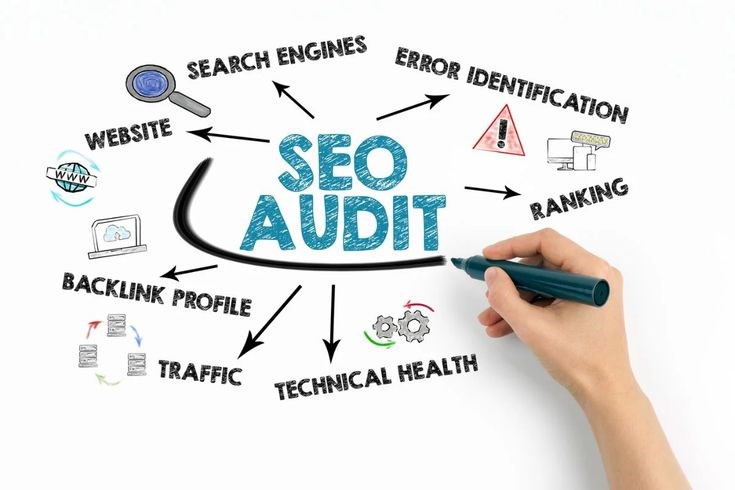
An SEO audit is a critical foundation for determining problems and strengths to optimize the position of the website on the Internet. Without proper audits, one is in a position of facing numerous issues that include technical issues, wrong content or old tactics, which may negatively affect your site rankings. Below is the simplified picture of the SEO audit check that you should go through in order to achieve the aim of obtaining better visibility of your Internet site. Here, readers will find tangible practices that will suit both newbies and the most advanced users to explore possible problems and introduce correct solutions to improve the effectiveness of SEO.
1. Check Website Indexing Status
Check whether or not your pages are indexable using Google search engine with the aid of the Google Search Console. Afterwards, ensure that some pages are not indexed correctly, for example, because of crawl errors or robots.txt restrictions, noindex tags and so on. Ensure that the vital pages are indexed by submitting a sitemap. There is evidence that suggests that proper indexing is very essential in the field of visibility. It is crucial to resolve all blocking issues on the spot to enhance the visibility of the articles to the search engine.
2. Analyze Site Structure & Internal Links
Analyze your website’s hierarchy and URL for SEO optimization. Also, it is clear that Screaming Frog plays a key role in determining broken links and poor internal linking. To organize content in a propositional and definable way facilitating its navigational pathway. It is evident that organization of plan enhances crawling activity and web usability. This is because internal links should spread the page authority to the desirable pages within the site.
3. Optimize On-Page SEO Elements
Optimize keyword for title and description, title and meta description, header titles. The content of the websites should be consistent with the keywords typed by the user but should not include too many of them. Make images responsive and ensure the used are tagged with an accurate and concise alt text that is also compressed. All the pages also need to have only one H1 tag and all the subheadings must be properly ordered. These aspects indeed influence the rankings and the click-through rates.
4. Test Page Speed & Mobile Usability
Using Google’s PageSpeed Insights on this aspect will determine the loading time of the page. Set images to be optimized, enable cache for browsers, and reduce the number of external resources that blocks the view of the site. Google can check if your site is mobile friendly with a tool known as the Google’s Mobile-Friendly Test. People are more likely to visit and repatriot faster to sites that load quickly and are built with responsiveness implementation. This is important as most of the search is done via mobile devices.
5. Audit Backlinks & Domain Authority
Conduct an SEO audit of your website backlink using Ahrefs or Moz. Identify all toxic backlinks and reject all of them. Concentrate on quality and relevancy of the link and link sources along with looking for the one from the authoritative websites. It is also important that you keep track of the score of your domain authority over time. It is important to have backlinks in a clean and strong sense because it generally enhances the website’s standing with search engine results and credibility.
6. Fix Technical SEO Errors
Check for crawl errors, broken links and 404 pages and rectify them. Make sure to use proper 301 redirects for information that has been moved. This write-up captures the header information to avoid duplicate content in SEO. Make sure that your XML sitemap is well updated and submitted to the various search engine platforms. Technical referring to the search engine optimization is actually the basis for all the other categories.
7. Improve Content Quality & Relevance
Audit existing content for accuracy, depth, and engagement. Plan the improvement, cookbook, and upgrade thin content as well as update old content and add some details to it. All text should reflect the current search engine optimization. It is also possible to delete pages that can be of low quality and may be a source of a low authoritative domain. Content that is rich and focuses on specific topics and accomplishes High-quality content gets more backlinks organically.
8. Optimize for Local SEO
Claim and optimize your Google My Business Profile. Maintain NAP uniformity across directories, here where Name, Address, Phone numbers are usually published. It is important to collect real customer feedback about the services provided by the company to respond to them as a professional. Here, local SEO assists businesses to rank their websites on the map and local search results thus increasing the chances of physically locating business.
9. Monitor Core Web Vitals
Track LCP (Loading), FID (Interactivity), and CLS (Visual Stability) metrics. Among these parameters for ranking of sites on Google, we find parameters associated with user experience. Compress large images, decrease the amount of time for running script codes, and minimize layout shifts. When meeting Core Web Vitals, rankings are likely to increase on the internet and visitors tend to spend more time or stay on the site due to such factors.
10. Track Performance with Analytics
Track the most important analytics by setting up the Google Analytics and Google Search Console. Monitor those arriving through organic search, bounce rates and how they convert on the site. Determine the amount of selected pages’ traffic, find out which pages are the least effective and which content does not yield the results you expect. Employ the facts in enhancing your SEO planning systematically. Accountability for performance guarantees optimization outcomes For anybody practicing optimization, it is crucial to keep track of performance regularly.
Conclusion
A strong SEO audit is very important and it plays a key role in keeping the website on good form. Following these 10 steps will help you find out the problems and issues related to content, speed, and backlinks thus making your site more prominent and rank higher to attract more organic traffic. Another advantage is that SEO audits ensure you are on track with the new changes made by the search engine and can avoid hitting a ranking dip. Incorporate the following strategies today to increase impressions, better the user experience and improve SEO. For this very reason, it is advises to be proactive and have your website achieve the long-term goals of SEO.


Leave a Comment