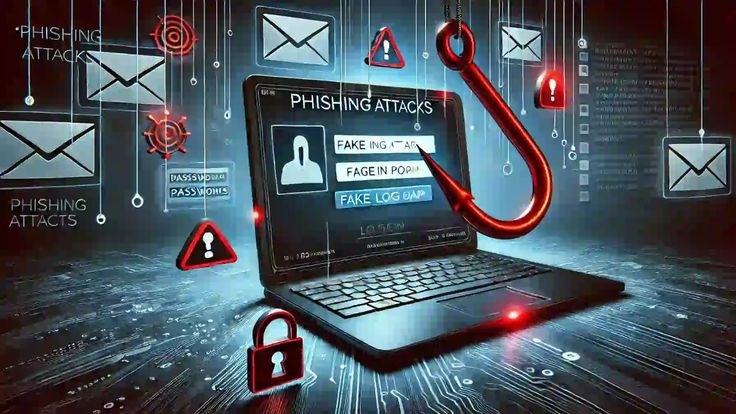
Phishing attacks are among the most common forms of cyber threats that are witnessed in the current world. They are designed to obtain the required user credentials like the login details and the financial details of the users by masquerading as genuine messages. In today’s world it is important to know how to protect oneself from phishing attacks and how to lead an organization's IT division to avoid giving a way to such deceptive information. This blog will provide practical tips on how to deal with this rising menace.
Recognize Common Phishing Tactics
Phishing is a type of attack that involves an attacker sending emails or short messages in a similar sounding or looking message as a trusted entity. Some of the things that should raise a concern include the improper use of greetings that are general, proper spelling, and doom or unknown senders of the email. The last social engineering technique involves creating a sense of urgency or fear to compel the victims to give out sensitive information. It is imperative to raise awareness of such practices in order to minimize these threats and ensure that all employees are aware of how they could be ministries and are capable of recognizing them.
Implement Advanced Email Filtering Solutions
Utilize specific email filtering tools with an aim of using machine learning algorithms in the identification as well as blocking of the phishing emails. The last recommendation for email security measures is to engage DMARC, which is a domain-based message authentication. Coupled with these technologies and together with training made for employees, this makes a very effective guard to prevent emails containing viruses to make it through to the employees’ mail inbox and further prevent successful phishing attacks.
Conduct Regular Employee Training
The fundamental reason for phishing success lies in human errors. Training continues for IT and the staff member undergoes mock phishing schemes to ensure that they are able to report these threats. These include: create awareness of cybersecurity that should be implemented in the organization; Ensure that employees are empowered with knowledge on how to report any suspicious act. The procedure of continuously educating the employees helps them to recognize new kinds of phishing and be prepared to protect against them.
Enable Multi-Factor Authentication (MFA)
MFA enhances the security in a way that an account can be protected with passwords and one-time codes to gain access. That means even though the credentials are obtained, MFA would deter any unauthorized access. The integration of MFA across the systems greatly decreases the effects of such phishing attacks since a hacker cannot easily exploit any information.
Monitor and Respond to Threats Proactively
SIEM is a particularly powerful tool that can be used to monitor the network for signs of trouble such as unauthorized login attempts or data breaches. a low-level tactical plan that can be followed to respond to incidents and safeguard the business from the threats that are posed such as hacking. Continuously update the used software and fix the existing weak spots to prevent hackers from being able to exploit them. Phishing continues to pose a significant threat to the organization’s IT security, and effective detection and response are critical in preventing it.
Conclusion
Cyber threats such as phishing remain relevant to this day and keep causing a lot of havoc to IT. Still, it becomes possible to identify typical scheming, use programmes and equipment more superior to the criminals’, train the workers, implement MFA, and monitor the systems in advance to prevent such attacks. As with any issue of security, cybersecurity involves collective defense thus it is important for every individual to be informed. Thus, the described strategies help businesses protect their data, retain customer trust and defend against phishing attacks in the long term.


Leave a Comment