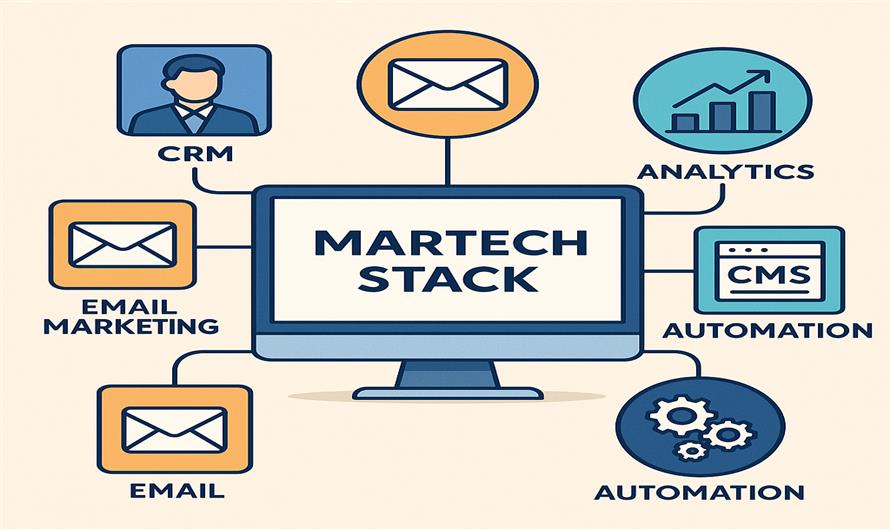
The present marketing environment is like a complex digital ecosystem with numerous tools and platforms. MarTech, meaning marketing technology, is the core of any successful marketing operations. However, out of the thousands of available instruments constructing a proficient MarTech stack can be really challenging. The present manual is aimed at auditing your current instruments, picking up the right technologies, and blending them smoothly, which ties closely to the foundations discussed in Digital Marketing.
What is a MarTech stack?
MarTech stack is a set of software and tools the marketing department uses to plan, execute, manage, and measure campaigns in various channels. For instance, the package might include email marketing platforms, social media management tools, analytics software, and customer relationship management systems. Having the most tools is not the key to success, but it is rather important that the selected technologies are in line with your business objectives and co-operate harmoniously. This is becoming more relevant as new technology in marketing continues to evolve.
Detailed MarTech Audit
It is paramount to first understand the present state before deciding on your future MarTech stack. Start with composing a detailed list of all marketing tools your organization is using. Write down the tool name, main function, number of the active users, costs, and utilization rate. Most of the time by such an inventory, organizations discover that they have two or three times the same-functioned tools or very expensive software which is barely used.
After the inventory of tools, one should also review them according to performance. Look at the rate of adoption, impact on marketing outcomes, and return on investment. Tools that do not bring any value should be replaced or removed. Moreover, marketers should be aware of the extent to which their tools communicate with each other since a lack of integration can result in data silos or the unification of disjointed customer journeys. During this stage, the role of market research tools becomes particularly relevant.
Choosing the most suitable marketing technologies
The first step in technology selection should be strategy rather than features. Write down your marketing goals for the next 12-24 months. Are your main objectives lead generation, customer retention, brand awareness, or revenue growth? Your aims will be leading which technologies will be at the top of the list.
Develop a standardized framework for evaluating the new technologies. Core criteria should be: functionalities, integration features, scalability, user experience, vendor support, and cost structure. Do not rush to add specialized tools but rather look for a strong foundation with your core technologies. The five necessary parts include: a CRM system, an email marketing platform, analytics tools, content management system, and marketing automation platform. During this stage, insights from market research tools can be particularly valuable.
Integration Strategy and Implementation
To have the right tools is just half the work. The real worth is in how well these technologies are integrated or interoperate. The marketing stack should not be looked at as separate tools but rather as one interconnected ecosystem. You ought to understand how data transfer between systems should be done with the CRM being the central data repository in most cases.
It might be a good idea to opt for integration platforms such as Zapier or Make which can link even the most disparate systems without the need for custom coding. Don’t attempt to change your entire stack in one go. Unveiling your stack step-by-step is less risky and gives your squad time to get used to it gradually. Commence with your essential integrations, inspect that they function properly, and then slowly bring in the other features.
Also, while integrating different technologies, you should define data governance policies that are very clear. Define data ownership, quality standards, privacy compliance measures, and access control. If governance is done properly it will ensure data accuracy in your stack and at the same time it will be safe for customer data.
Training and Ongoing Optimization
Even with the most advanced marketing technology stack, a team that is not competent in the use of it is going to fail. You have to set money aside for complete training programs and also create documentation that will make it easier for team members to use the full capabilities of your MarTech stack. Embrace learning continuously, as marketing technologies are changing very fast.
Creating a MarTech stack is not a one-time task but rather an ongoing process. Make it a habit to have regular check-ups quarterly or bi-annually of your stack’s performance. Be flexible and open to making changes when your present stack is no longer helpful. Keep an eye on industry trends as well as new technology but don’t feel obliged to purchase every new tool.
It is important to keep in mind that the primary mission is not to have the maximum number of tools but, to put it simply, the right tools that function harmoniously to sustain your marketing objectives and bring great customer experiences. In today’s marketplace, which is digital, with a carefully planned and constantly optimized marketing technology stack, you can significantly raise the bar for your competitors.


Leave a Comment