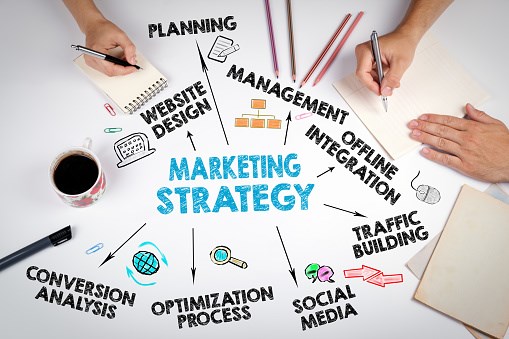
Business growth with a solid brand presence becomes achievable through strategic marketing planning in our current competitive business world. The guide outlines complete instructions for strategic marketing development that includes essentials alongside step-by-step execution methods.
1. Understanding Marketing Strategy
Marketing strategies represent detailed operational approaches that serve to advertise goods alongside their distribution to specific audiences and help businesses fulfill their organizational targets. The analysis of current market conditions assists businesses to determine necessary customer requirements and develop competitive marketing techniques that fulfill customer wants.
2. Conducting Market Research
A well-established marketing strategy requires market research as its essential starting point. The process requires collecting market data coupled with competitive and consumer information that shapes organizational decisions.
- Determine your optimal customers through an understanding of their demographic information along with psychological characteristics as well as behavioral habits.
- Understand competitors by evaluating their SWOT elements to spot vacancies that exist within the market landscape.
- Extensive monitoring of current market directions, consumer trends, and technological developments that will affect your organization must take place.

3. Setting Clear Marketing Objectives
Set measurable targets that fulfill all criteria of SMART objectives that match your organization's main business objectives. Business objectives range from growing brand exposure to producing customer leads and improving revenue levels along with market expansion initiation.
4. Developing a Unique Value Proposition (UVP)
A UVP explains the distinctive qualities of your product while showing customers how choosing your business provides them superior value compared to other options. A clear statement should deliver essential benefits to consumers in a compelling way.
5. Crafting the Marketing Mix (4 Ps)
The marketing mix involves four essential components that companies must implement.
- Your product must fulfill all the requirements and wants that your target audience demands.
- A pricing strategy must be established to suit market competition while showcasing the delivered value.
- The selection of channels that will deliver your products to your clients needs thorough assessment.
- The establishment of promotional tactics through advertising, public relations, and sales promotions should aim to increase awareness while generating higher sales numbers.
6. Choosing Marketing Channels
Decide on communication channels that serve your target demographic and support your marketing goals. The selection mix of classic and digital channels should include:
- You should construct engaging content that will attract target audience members and hold their engagement.
- The outreach through social media consists of utilizing Facebook alongside Instagram and LinkedIn to establish connections with target customers.
- The strategy of email marketing enables businesses to build client relationships through mailed messages and to guide potential leads.
- Search Engine Optimization (SEO) helps improve online content visibility for search engine result pages.
7. Budgeting and Resource Allocation
Resources should be properly distributed through budgetary decisions applied to individual marketing operations. All budget allocation decisions must include factors involving advertising expenses together with content development resources and necessary software systems and employee staffing needs.
8. Implementing the Marketing Plan
Execute your marketing strategy by:
- Your team needs assignments for roles and responsibilities to become clear between members.
- The marketing group should determine precise schedules for each marketing operation to achieve timely completion.
- The monitoring process requires the implementation of key performance indicators (KPIs), which enable tracking of marketing performance.
9. Evaluating and Adjusting the Strategy
You should evaluate your marketing strategy systemically through KPI assessment and customer feedback acquisition on a regular basis. Make strategic changes according to data analysis results and modifications in market circumstances.
10. Leveraging Digital Marketing Tools
Your digital marketing tools help to strengthen the overall strategy through various functions.
- Analytics platforms enable users to track website traffic together with user behavior alongside campaign performance data.
- Customer Relationship Management (CRM) Systems: Manage customer interactions and data.
- The use of marketing automation software will help companies perform repetitive work more efficiently.
11. Building Brand Awareness
For building a powerful brand image, your organization should:
- Your brand messages should appear uniformly across all promotional materials.
- Attack the media landscape through public relations activities to receive featured coverage and strengthen your organization's credibility.
- The company should engage with its community by participating in industry events along with its support of local initiatives to boost its public presence.
12. Fostering Customer Loyalty
Retain customers by:
- The organization needs to respond to customer requirements through immediate and successful customer service delivery.
- Loyalty programs create rewards systems that encourage clients to make repeat transactions while offering them opportunities for referrals.
- The marketing approach requires customized messaging that fits the preferential choices of each customer.
13. Exploring New Market Opportunities
Identify opportunities for expansion by:
- Strategy developers should split their target audience into separate segments that represent specific requirements.
- The business should develop new products and services that respond directly to current market demands.
- Activities aimed at market entry into different geographical regions present additional opportunities for reaching more customers.
14. Staying Adaptable and Innovative
Modern marketing continues to face continuous transformations across its environment. Stay ahead by:
- Your marketing success will benefit from implementing new technological solutions through selective tool adoption.
- To access lasting success, individuals must remain engaged with industry progress and ideal business strategies.
- You should develop an environment that encourages innovation among your marketing team members.
Conclusion
Launching a marketing strategy demands strategic planning along with detailed execution followed by persistent evaluation. Executed in this manner, you can create a plan that will fuel company growth while developing your brand and securing sustainable business operations.


Leave a Comment
1 Comments