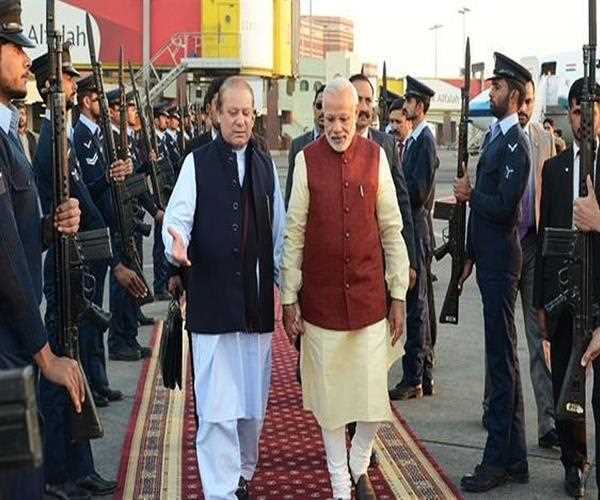
A suggestion of diplomatic conversation may ignite optimism, suspicion, and everything in between in the often tense relationship between India and Pakistan. This complicated dynamic has once again come to light due to recent rumours about a possible renewal of discussions between Prime Minister Narendra Modi of India and the Sharif family of Pakistan. The possibility of resuming communication between these two nuclear-armed neighbours has been dubbed the "most vexing" test because it raises concerns about the viability, goals, and possible results of such a conversation.
Decades of unsolved strife, territorial conflicts, and ingrained mistrust are at the core of the issue. Pakistan and India have fought several wars, clashes, and diplomatic standoffs since separating from British colonial authority in 1947, with the majority of these conflicts centred on the disputed territory of Kashmir.
A multitude of causes, including historical animosities, internal political concerns, and external influences, have impeded development despite sporadic efforts to restore relations and encourage collaboration.
The Sharif family's participation in this, especially that of former prime minister Nawaz Sharif and his daughter Maryam Nawaz, adds another level of intricacy to the possible conversation. As an experienced politician with a track record of interacting with India, Nawaz Sharif has frequently promoted harmony and peace between the two neighbours. Though they were not entirely successful, initiatives to strengthen ties were made during his time as prime minister, notably the 1999 Lahore Declaration and the 2001 Agra Summit.
But Nawaz Sharif's attempts were often frustrated by internal resistance, military actions, and the complex network .
Pakistan's internal political landscape. Power conflicts, legal disputes, and accusations of corruption have tarnished the Sharif family's political reputation and made it more difficult for them to continue a consistent diplomatic strategy with India. In spite of these obstacles, the Sharifs continue to be powerful players in Pakistani politics, having the ability to sway public opinion and direct government policy.
Prime Minister Narendra Modi's strategy towards Pakistan, on the other hand, has been characterized by a blend of aggressiveness, pragmatism, and sporadic conciliation. As an ardent supporter of India's security interests and national interests, Modi has taken a strong stand against violence in the area that is supported by Pakistan and cross-border terrorism. The fallout from well-publicized events like the Pulwama assault in 2019 and the Uri attack in 2016 highlighted how delicate.
Putting both sides on the verge of war in their bilateral ties.
Under spite of these differences, Modi has demonstrated a readiness to interact with Pakistan under specific circumstances, as demonstrated by his unannounced trip to Lahore in 2015 to meet with Nawaz Sharif. Nevertheless, any hopes of a protracted conversation were dashed by further events, such as the attack on the Pathankot airbase and the escalation in Kashmir. Domestic factors, regional geopolitics, and India's strategic imperatives all play a major role in shaping Modi's diplomatic strategy, thus any overtures made to Pakistan would likely face scrutiny and criticism.
In light of this, the question is raised: Can the Sharifs and Modi resume talks? If yes, what would it mean for peace and stability in the region? A careful balancing act including political will, strategic planning, and outside forces holds the key to the solution. The possibility of the Sharif family regaining control of Pakistan, whether via elections or covert talks, may present a window of opportunity for improved relations with India.
Such a situation is, however, dependent on a number of important variables. The ability for both parties to put communication above conflict and acknowledge the advantages of cooperative and peaceful cohabitation comes first. Second, the key concerns that underlie the dispute, such as bilateral commercial relations, cross-border terrorism, and the status of Kashmir, must be discussed in any negotiations. Third, the participation of other parties, particularly the US, China, and other regional powers, may have an impact and offer leverage for positive interaction.
Furthermore, it is impossible to overestimate the importance of people-to-people interactions, civil society projects, and Track II diplomacy in fostering confidence and promoting mutual understanding between the two countries. Facilitated by specialists and non-governmental players, Track II conversations have been successful in bridging the gap between official stances and producing innovative solutions. Likewise, cultural exchanges, sports diplomacy, and humanitarian endeavours function as measures to foster confidence, laying the groundwork for meaningful diplomatic discussions.
However, there are many challenges and traps in the way of effective discourse, from ingrained animosity to vested interests and spoilers on both sides. Hardliners in the security services of India and Pakistan regard any reconciliation with distrust, believing that any compromise would jeopardize their respective strategic goals. Similar to this, extreme groups use violence and propaganda to undermine peace initiatives because they are driven by religious zeal and nationalist rhetoric.
Talks between Sharifs and Modi are not only about picking up where they left off; they are about keeping them going in the face of domestic resistance and outside pressure. To break free from the stagnation of the past and forge a new path toward wealth and peace, one needs bravery, foresight, and statesmanship. History's lessons serve as a sobering reminder of the dangers of passivity and the necessity of acting now to end the cycle of violence.
The future of Pakistan-India ties is in doubt and teeters on the brink of hopelessness while the world waits anxiously. The Sharifs and Modi are at a turning point in history, one that has the potential to change millions of people's lives and reshape South Asian geopolitics.
The path that lies ahead is tainted with uncertainty, but it is also full of promise, calling us to dream big enough to see a time when harmony rules and hatred gives way to compassion. If we can have the bravery to accept it, the "most vexing" exam could ultimately turn out to be the most fruitful.


Leave a Comment