MapReduce Reducer Class:
MapReduce API has two main classes which do the Map-Reduce task for us: Mapper class and Reducer class.
Pig Architecture and Application Flow in Hadoop
Simple” often sense as “elegant” when it comes to those remarkable architectural drawings for that new Silicon Valley mansion we have planned for when the money starts rolling in after we implement Hadoop.
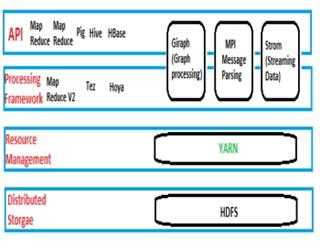
YARN: Yet Another Resource Negotiator
With the release of Hadoop 2, however, YARN was introduced, which open doors for whole new world of data processing opportunities.
MapReduce Mapper Class:
Mapper class is responsible for providing implementations for mapping jobs in MapReduce.
Managing files with Hadoop File System Commands
HDFS is one of the two main components of the Hadoop framework; the other is the computational paradigm known as MapReduce.
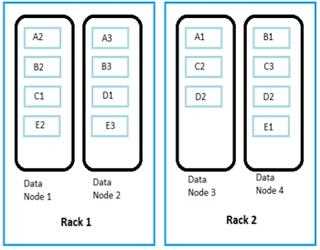
Data Replication in Hadoop: Replicating Data Blocks (Part – 1)
In HDFS, the Data block size needs to be large enough to warrant the resources dedicated to an individual unit of data processing On the other hand.
Hadoop Java API for MapReduce
Hadoop has gone through some big API change in its 0.20 release, which is the basic interface in the 1.0 version .
Input Splits and Key-Value Terminologies for MapReduce
As we already know that in Hadoop, files are composed of individual records, which are ultimately processed one-by-one by mapper tasks.
Log Data Ingestion with Flume
Some amount of data volume that ends up in HDFS might land there through database load operations or other types of batch processes.
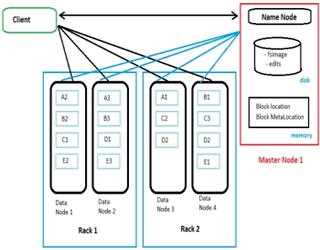
Name Node Design and its working in HDFS
Whenever a user tries to stores a file in HDFS, the file is first break down into data blocks, and three replicas of these data blocks are stored in slave nodes (data nodes) throughout the Hadoop cluster
Check pointing process in HDFS
As we already know now that HDFS is a journaled file system, where new changes to files in HDFS are captured in an edit log that’s stored on the NameNode in a file named edits.
Concept of Data compression in Hadoop
The massive data volumes that are very command in a typical Hadoop deployment make compression a necessity.