AI Helps Uncover a Medical Mystery After Decades of Unexplained Symptoms
Artificial intelligence is increasingly finding applications in healthcare, from medical imaging to disease screening and clinical research. A recent personal account published by The Wall Street Journal highlights another potential use: helping patients identify patterns across years of medical records.
Journalist Katherine Bindley described how she turned to Google's Gemini AI after experiencing unexplained pain, exhaustion and repeated medical investigations for decades. Despite consulting multiple doctors and undergoing several tests, she had not received a satisfactory explanation for her symptoms.
After reviewing her medical history, ultrasound reports, CT scans, MRI results and surgical records, Gemini suggested two possible conditions: endometriosis and adenomyosis.
Subsequent consultations with specialists supported those suspected diagnoses.
The experience has raised an important question: Could AI help patients and doctors identify medical conditions that are difficult to diagnose using fragmented medical histories?
How Gemini Connected the Medical Clues
Bindley's medical difficulties began long before she started using AI.
Her history included an emergency appendectomy at 18, recurring abdominal pain, suspected ovarian cyst ruptures, heavy menstrual bleeding and persistent exhaustion.
Over the years, she underwent several investigations. Tests for conditions such as Crohn's disease, celiac disease and ulcers did not provide the answers she needed.
A particularly important clue was her persistently low ferritin level, a measure of the body's stored iron. Her reported level was seven, which was associated with her heavy menstrual bleeding and fatigue.
When she started asking Gemini about her symptoms, the AI suggested adenomyosis and endometriosis as possible explanations.
Rather than considering individual symptoms separately, the system helped her examine the relationship between different medical events over time.
She then provided additional information, including previous imaging reports and surgical records, allowing Gemini to compare findings from different stages of her medical history.
What Are Endometriosis and Adenomyosis?
The two conditions suggested by Gemini are related to endometrial-like tissue but affect different parts of the reproductive system.
Endometriosis
Endometriosis is a chronic inflammatory condition in which tissue similar to the lining of the uterus grows outside the uterus.
It can affect the ovaries, fallopian tubes, pelvic lining, bowel and other organs. The condition may cause:
- Severe menstrual cramps
- Chronic pelvic or abdominal pain
- Heavy menstrual bleeding
- Pain during sexual activity
- Digestive or urinary symptoms
- Fertility difficulties
- Fatigue and reduced quality of life
The World Health Organization estimates that endometriosis affects approximately 10% of women of reproductive age worldwide, or around 190 million people.
Adenomyosis
Adenomyosis occurs when tissue similar to the uterine lining grows into the muscular wall of the uterus.
Common symptoms can include heavy or prolonged menstrual bleeding, painful periods, pelvic discomfort and an enlarged or tender uterus.
Both conditions can affect quality of life, and their symptoms may overlap with other medical problems.
Why Was the Condition Difficult to Identify?
One of the most interesting parts of the story is that earlier medical imaging did not provide a clear answer.
Bindley had undergone numerous ultrasounds, and an MRI report also showed no signs of endometriosis.
However, a normal imaging result does not always rule out endometriosis. Some forms of the disease can be difficult to detect, depending on their location, size and the imaging technique used.
The WHO notes that endometriosis diagnosis can involve symptoms, clinical assessment and imaging, while surgery may sometimes be used to confirm the condition.
The organization also reports that diagnosis can take between four and 12 years on average.
This diagnostic challenge is one reason why reviewing a patient's complete medical history can be valuable.
How Specialist Doctors Supported the AI's Findings
Gemini's suggestions were not treated as a final medical diagnosis.
Bindley discussed the possibility of endometriosis with doctors at the University of California, San Francisco (UCSF). She received further evaluation, including a specialist consultation and imaging.
An initial specialist assessment did not identify endometriosis on MRI. However, another specialist later performed a dynamic ultrasound, which examines how pelvic organs move in relation to one another.
During this examination, the specialist observed signs of organs being tethered by scar tissue and diagnosed both endometriosis and adenomyosis.
Two additional specialists subsequently agreed with the suspected diagnoses.
This illustrates an important distinction: AI helped identify a possible explanation, but medical specialists performed the clinical assessments and made the diagnoses.
How AI Can Help Doctors Find Patterns in Medical Records
Traditional medical consultations often focus on a particular complaint or a limited period of a patient's history.
However, some medical conditions develop over many years and produce symptoms across multiple body systems.
AI tools can potentially help by analysing large amounts of information together.
Some possible applications include:
- Medical history analysis: Comparing symptoms and test results recorded over several years.
- Pattern recognition: Identifying relationships between symptoms that may appear unrelated.
- Medical record summaries: Organising long reports into a more accessible timeline.
- Research assistance: Helping patients understand possible conditions and prepare questions for specialists.
- Clinical decision support: Providing healthcare professionals with additional information to consider during evaluation.
AI-assisted healthcare is already being explored in other areas. For example, read about how AI is helping India screen for tuberculosis faster.
Can AI Replace Doctors in Medical Diagnosis?
Despite the positive experience described in the report, AI should not be considered a replacement for doctors.
AI systems can generate incorrect information, misunderstand medical records, overlook important details or express confidence in an unsupported conclusion.
Bindley's experience itself demonstrates this limitation. Gemini initially suggested a strong likelihood of endometriosis, but an MRI report appeared to contradict that assessment. The eventual specialist evaluation required further clinical investigation.
There is also a risk that AI may reinforce a user's existing assumptions instead of challenging them.
Medical professionals must evaluate symptoms, examine patients, interpret test results and decide whether additional investigations or treatments are appropriate.
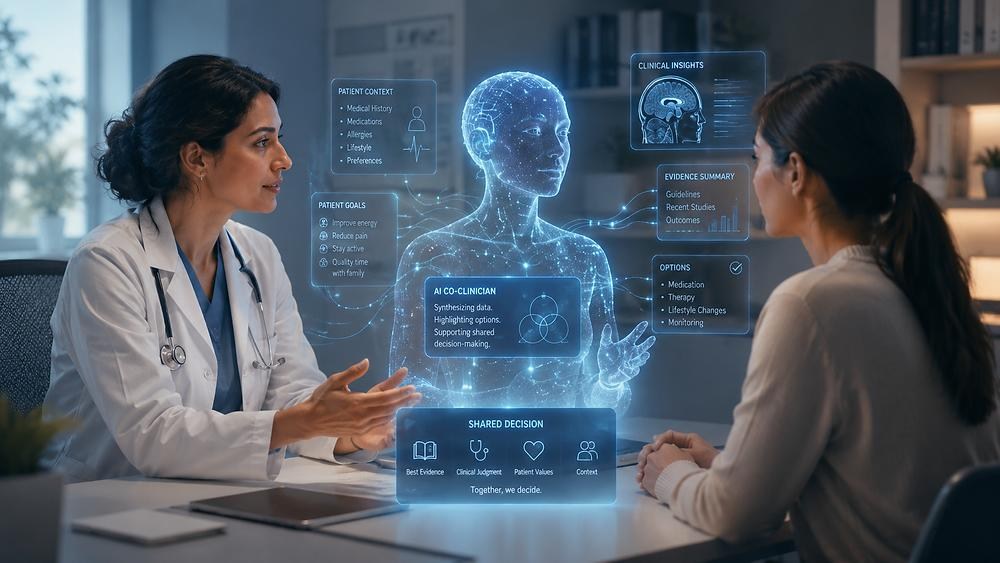
AI is most useful when it supports informed conversations between patients and qualified healthcare professionals.

What Patients Can Learn From This Story
The story offers several practical lessons for people dealing with unexplained or recurring symptoms.
- Maintain a timeline of symptoms, treatments and medical investigations.
- Keep copies of relevant test reports and medical records.
- Ask doctors how different symptoms and previous findings might be connected.
- Seek a specialist opinion when symptoms persist or remain unexplained.
- Use AI to understand medical terminology and prepare questions, not to prescribe treatment or make independent medical decisions.
- Avoid uploading sensitive health records to AI services without understanding their privacy and data-handling policies.
A patient who arrives with an organised medical history may be better prepared for a detailed consultation.
The Future of AI in Healthcare
The growing use of AI in healthcare is creating opportunities beyond traditional symptom checkers.
Advanced systems can help analyse medical records, support radiology workflows, identify patterns in clinical data and assist researchers studying rare or difficult-to-diagnose conditions.
However, the technology must be evaluated carefully. Accuracy, privacy, clinical validation and human oversight remain essential.
The real value of AI may not be that it replaces a medical professional, but that it helps patients and doctors see information that was previously scattered across years of reports and consultations.
Conclusion
Katherine Bindley's experience shows how artificial intelligence can potentially help uncover patterns hidden in a long and complicated medical history.
Google's Gemini helped her investigate possible endometriosis and adenomyosis after years of unexplained symptoms. Specialist examinations subsequently supported those diagnoses.
The story is an encouraging example of AI-assisted health research, but it is not proof that chatbots can reliably diagnose medical conditions on their own.
The future of healthcare will likely involve collaboration between patients, medical professionals and AI systems—with clinical expertise and human judgment remaining central to every diagnosis.
Sources and References
World Health Organization – Endometriosis: Facts, Symptoms and Diagnosis