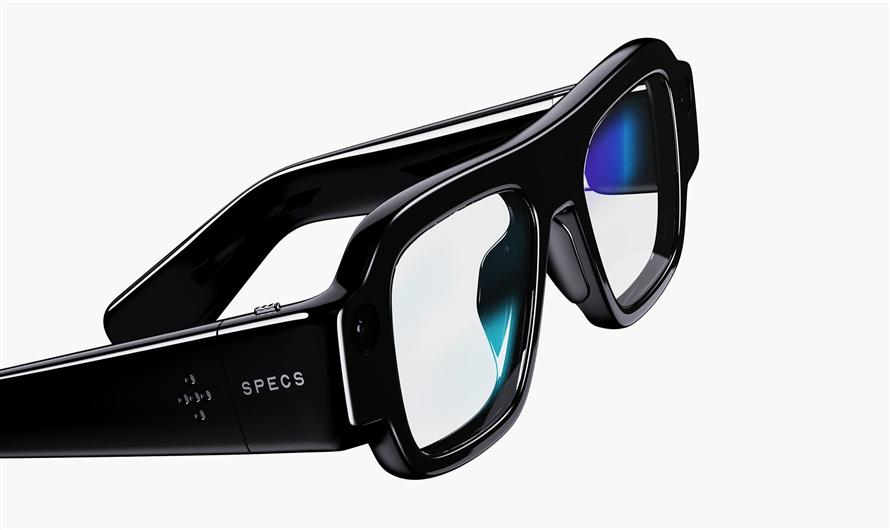
Snap Debuts Standalone Specs AR Glasses for $2,195
Snap Inc. officially unveiled its Snapchat Specs AR glasses augmented reality smart glasses on 06/16/2026, pricing the device at $2,195 and opening pre-orders to developers and early adopters worldwide.
The Specs are not a smartphone accessory — they are a standalone computing platform. CEO Evan Spiegel introduced the device at a public event, describing it as "a new type of computer, a see-through computer," signaling that Snap is betting on a post-smartphone future rather than iterating on its earlier, camera-focused eyewear. The four-figure price tag — a steep jump from previous Spectacles generations — reflects a deliberate repositioning toward high-end hardware rather than mass-market consumer gadgets.
According to CNBC, the launch also formalized Snap's structural shift: the company established a dedicated Specs subsidiary earlier this year, underscoring how seriously it is treating hardware as a long-term business pillar. The technical ambitions behind that price point — dual processors, waveguide optics, and sub-14-millisecond latency — are what the specs sheet is really selling.
Technical Specs: Dual Snapdragon Power and Low-Latency AR
The Snapchat Specs AR glasses hardware marks a significant leap over prior generations, packing dual Qualcomm Snapdragon system-on-a-chip processors into a standalone form factor that requires no tethered phone or PC. According toSnap's official newsroom, this dual-SoC architecture divides workloads between processing and display tasks to sustain real-time snap augmented reality overlays without thermal throttling.
Key hardware specifications include:
- Field of view: 46-degree diagonal at 37 pixels per degree resolution
- Motion-to-photon latency: 13 milliseconds via Snapchat's 'Spatial Engine' — low enough to minimize motion sickness
- Optics: LCoS micro-projectors paired with waveguide lenses for natural light blending
- Form factor: Standalone, with onboard compute requiring no companion device
The 13ms latency figure is particularly notable — most industry benchmarks cite anything under 20ms as the threshold for comfortable extended wear. On thermal performance, Snapchat says the dual-chip layout distributes heat across the frame, reducing hotspot buildup during sustained sessions. How Snap translates these specs into a practical developer platform is where things get especially interesting.
The Developer Focus and the Future of Snapchat OS
The $2,195 price tag on Snapchat Specs AR glasses AR glasses isn't a miscalculation — it's a deliberate filter designed to attract serious developers over casual consumers. By positioning the Snapchat Specs AR glasses in a professional bracket, Snap is seeding its ecosystem with builders who can create the Lenses and spatial experiences needed before a broader consumer launch materializes.
Central to that ecosystem is Snapchat OS, an operating system purpose-built for environmental mapping and six-degrees-of-freedom tracking. The workload is split between two processors — one dedicated to environmental mapping and one running Snapchat OS and Lenses — according to Spectacles.com, delivering a display equivalent to a 100-inch screen viewed from 10 feet away. That processing architecture reflects Snapchat's broader alignment with Silicon Valley's growing "post-smartphone" thesis, a direction CEO Evan Spiegel has publicly championed as the company's long-term bet.
Developers ready to build in this space can pre-order the hardware now via Specs.com, with units expected to ship this fall.