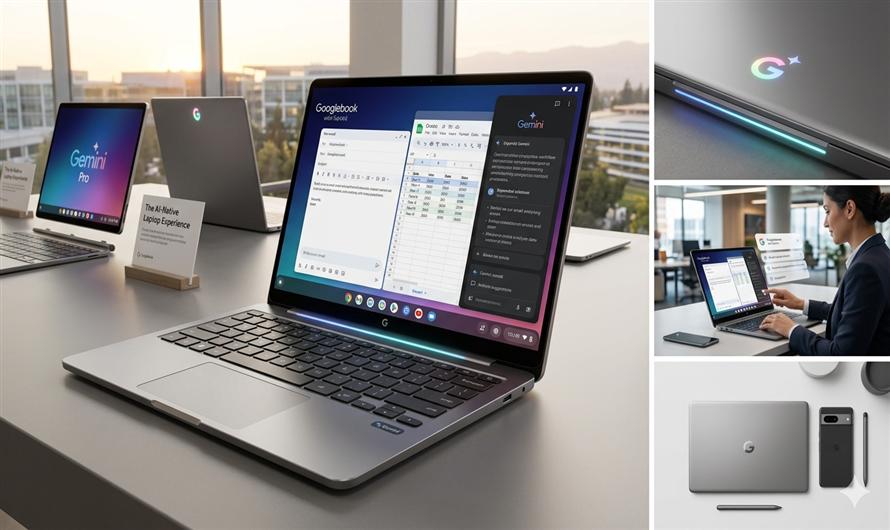
Google has officially announced Googlebook, a new category of premium, AI-native laptops built entirely around the Gemini AI ecosystem. Unveiled during "The Android Show: I/O Edition," this hardware ecosystem bridges the gap between desktop functionality and mobile environments by combining the core elements of Android and ChromeOS into a deeply integrated AI operating system.
Key Product Highlights
- Gemini at the Core: Unlike traditional laptops with retrofitted AI software, Googlebooks are engineered from the ground up to offer deeply baked-in, proactive AI assistance.
- The Magic Pointer: A headline feature replacing the standard cursor. Wiggling the pointer over elements on your screen prompts Gemini to generate instant, contextual suggestions—such as scheduling an event when hovering over an email date, or combining two distinct images to visualize them together.
- Deep Android Integration: Designed to serve as a seamless partner to Android smartphones. Users can stream and interact with their mobile apps directly on the laptop screen via Cast My Apps, and immediately pull assets into desktop workflows with Quick Access phone-to-PC file syncing.
- Premium Design Signature: Devices will move away from the "budget classroom" reputation of legacy Chromebooks, opting instead for high-end construction materials and a physical, glowing "glowbar" visual indicator that highlights the laptop's AI activities.
Release Timeline and Partnerships
Google is collaborating with major hardware manufacturers—including Acer, ASUS, Dell, HP, and Lenovo—to develop the first wave of Googlebook devices. The ecosystem will support both ARM and x86 silicon architectures from Intel, MediaTek, and Qualcomm.
The first commercial Googlebook devices are slated to hit shelves in Fall 2026. Google has clarified that existing Chromebooks will remain fully supported alongside this new premium category throughout their standard 10-year lifespans.