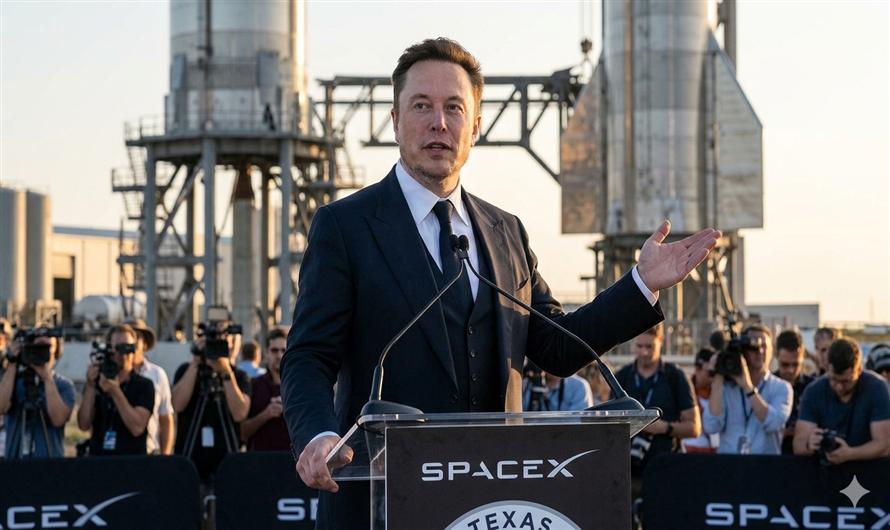
Tech entrepreneur Elon Musk has once again stirred global conversation—this time over the future of jobs and whether governments should provide a universal income in an AI-driven world.
Speaking about the rapid rise of artificial intelligence, Musk suggested that automation could eventually replace a large portion of the human workforce. From manufacturing to white-collar roles, he believes AI systems will become capable of performing tasks faster, cheaper, and more efficiently than people. While that may sound alarming, Musk framed it as a potential turning point rather than a crisis.
According to him, the massive productivity gains from AI could lead to a world of abundance, where goods and services become significantly cheaper and more accessible. In such a scenario, he argues, governments might need to step in with what he calls a “universal high income”—a system where everyone receives financial support, not just a basic safety net but enough to maintain a comfortable standard of living.
The idea builds on the concept of Universal Basic Income (UBI), which has been discussed for years but remains controversial. Musk’s version goes a step further, suggesting that future wealth generated by AI could be redistributed at a much larger scale.
His comments have drawn both support and skepticism. OpenAI CEO Sam Altman has previously supported UBI experiments, while former U.S. presidential candidate Andrew Yang has made income support a central part of his economic vision. Both have warned that AI could disrupt labor markets faster than new jobs are created.
However, not everyone is convinced. Some economists argue that widespread cash distribution could still lead to inflation, especially if supply doesn’t keep up with demand. Others point out that technological revolutions in the past—like the industrial age—initially displaced workers but eventually created entirely new industries and opportunities.
Beyond economics, Musk’s remarks tap into a broader philosophical question: if machines can do most of the work, what role will humans play? Will people focus more on creativity, learning, and leisure, or will inequality deepen as technology concentrates wealth among a few?
For now, there are no clear answers. But as AI continues to evolve at a rapid pace, the conversation Musk has reignited is becoming harder to ignore.