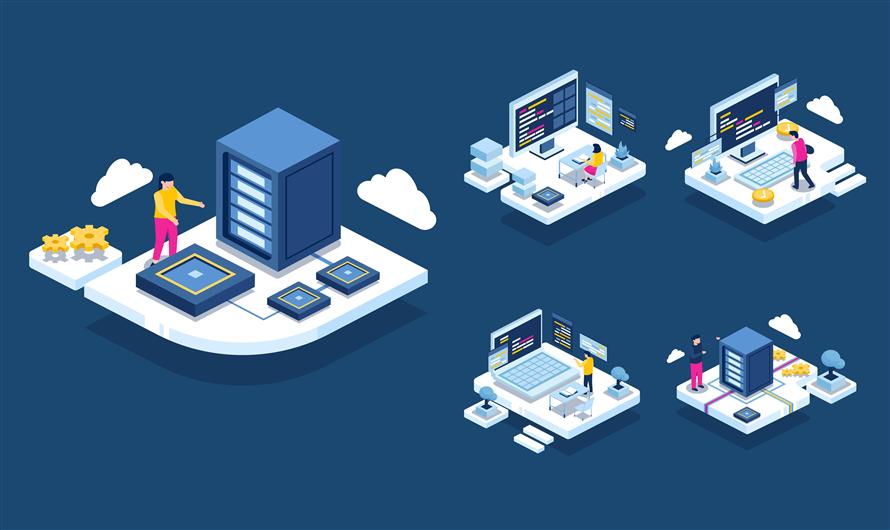
Digital systems today are increasingly relying on real-time data processing, with the capacity to process data and react in real time. Such applications as autonomous vehicles, remote medical care monitoring, industrial automation, and augmented reality cannot afford delays due to the need to transfer data to remote cloud servers.
It is in this regard that edge computing is transformative. Edge computing is much faster and smarter by processing data near its source, cutting the time and latency by a significant margin, and making real-time applications of edge computing faster, smarter, and more reliable.
Understanding Real-Time Applications
Real-time applications are systems that demand real-time data processing and response. The difference of milliseconds can have an effect on performance, safety, or experience.
Examples include:
- Self-driving cars responding to impediments.
- Smart grids equalizing energy loads.
- Augmented reality and online gaming.
- Financial trading systems
- Remote robotic surgery
Speed and reliability are not just wants in such cases, but necessities.
How Edge Computing Enables Real-Time Performance
Ultra-Low Latency
The conventional cloud computing presupposes the transmission of data to data centers where processing and analysis are performed, which creates latency. Edge computing operates on data at the edges of the network, the edge devices or on neighbouring servers, with minimal delay.
Impact:
- Faster response times
- Immediate decision-making
- Enhanced security of systems of importance.
For example, a self-driving car will not wait to be confirmed by clouds that it should use the brakes. By means of edge processing, it can respond instantaneously.
Faster Data Filtering and Prioritization
Real-time systems come with massive streams of data. Edge computing processes and analyzes data on-site and only transmits data of relevance to the cloud.
Impact:
- Reduced network congestion
- Quicker analytics
- More effective utilization of the bandwidth.
This makes sure that vital alerts are given priorities as compared to unnecessary data.
Improved Reliability and Continuity
The real-time applications are usually deployed in a setting where the network connectivity can be unpredictable. Edge computing enables the systems to operate without relying on continuous connectivity with the cloud.
Impact:
- The operations during the downtime.
- Greater system resilience
- Less downtime in the factories.
An example is that manufacturing systems are able to keep producing even in the case of the temporary loss of cloud connectivity.
Improved Security and Privacy of Data
Real-time applications, in many cases, involve sensitive data. Edge computing minimizes cyber threat exposure through information processing locally.
Impact:
- Lower risk of data breaches
- Adherence to data protection laws.
- Improved management of sensitive data.
This is particularly important in medical care and finance.
Key Industries Benefiting from Real-Time Edge Computing
Healthcare
Wearable computers and hospital surveillance systems are based on edge computing to process patient data in real-time. In case of irregular heartbeats or vital modifications, alerts will be raised instantly.
Benefits:
- Faster diagnosis
- Instant response to emergency.
- Reduced hospital workload
Autonomous Transportation
Self-driving vehicles handle data provided by numerous sensors in a second. Edge computing enables vehicles to:
- Detect obstacles
- Adjust speed
- Navigate safely in real time
Real-time driving decisions would not be possible without local processing.
Automation in Industry (Industry 4.0)
The edge devices are applied in smart factories to track the performance of machinery and identify anomalies in real time.
Benefits:
- Predictive maintenance
- Reduced equipment failure
- Greater efficiency in production.
Smart Cities
Edge computing is applied in traffic management systems to modify signals depending on real-time traffic information.
Applications:
- Congestion reduction
- Public safety notifications in real-time.
- Effective energy distribution.
Customer Experience and Retail
Edge-enabled systems are used by retail stores to:
- Inventory tracking in real-time.
- Smart checkout
- In-store suggestions, planned to order.
These applications improve customer experience, and they also increase operational efficiency.
The Role of 5G in Real-Time Edge Applications
The 5G network growth enhances edge computing functions by offering:
- Lowest possible latency connection.
- Higher bandwidth
- Scalability in implementing massive IoT.
Long-distance communications between devices and systems can be seamlessly facilitated with 5G and edge computing, driving the innovations of immersive augmented reality and connected infrastructure.
Challenges in Real-Time Edge Deployment
Although edge computing has its benefits, it is not an easy task to apply to real-time systems:
- The distributed infrastructure management.
- Ensuring endpoint security
- Increased initial cost of hardware.
- Integration with other cloud systems.
Organizations must balance performance benefits with operational complexity.
The Future of Edge Computing with Real-Time Applications
With the integration of artificial intelligence (AI) and machine learning into devices, edge computing will be changed to become what can be called intelligent edge systems, and these computing systems are able to make autonomous decisions.
- The future developments can involve:
- AI-driven edge analytics
- Industrial systems that are self-optimizing.
- Real-time intelligent robotics.
Complete interconnected smart systems.
The real-time responsiveness will turn into a norm and not a competitive edge.


Leave a Comment