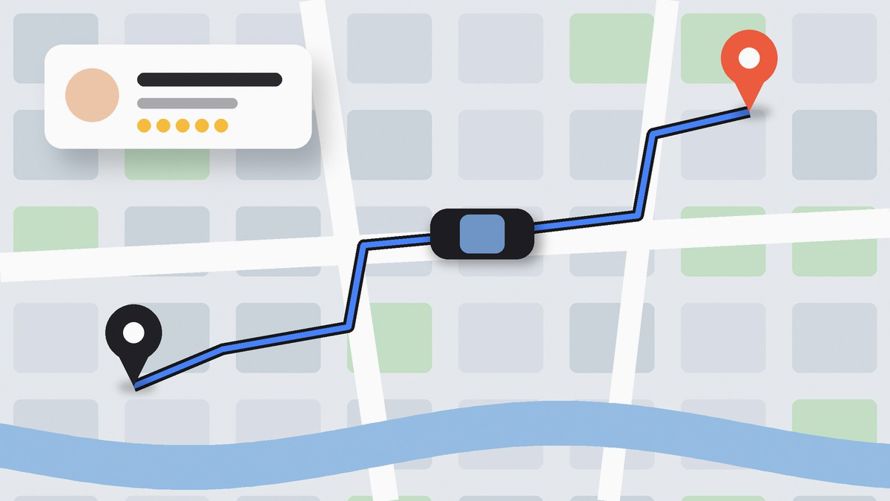
Before Uber, getting a taxi in many cities meant standing at the roadside, waving, and hoping. You often did not know when a car would arrive or how much the trip would cost. Uber’s idea was to put the whole process inside a phone: tap a button, watch the car approach, and pay without cash. It sounds obvious now, but in 2009 it was a bold bet on a new kind of device.
An Idea Born From a Missing Taxi
The origin story usually starts with Garrett Camp, a Canadian entrepreneur who had already sold the web discovery tool StumbleUpon. Frustrated by how hard it was to find a cab in San Francisco, he began working on an app for booking black cars. Travis Kalanick, another founder who had sold a startup, joined him, and the two shaped the idea together after struggling to find a taxi during a tech conference in Paris. The service, first called UberCab, launched in San Francisco in 2010.
At first it was a premium service. Users booked licensed black cars, paid more than a taxi fare, and got reliability in return. The real turning point came in 2012 with UberX, which let ordinary drivers use their own cars. That made rides far cheaper and opened the door to enormous growth.
Growth at Any Cost
Uber expanded city after city at remarkable speed. It often launched first and dealt with regulators later, arguing that it was a technology platform rather than a taxi company. That approach won it millions of users but also led to protests by taxi drivers, court battles and outright bans in some places.
It also burned through huge sums of money. Cheap fares and driver incentives were funded by investors who believed the winner would take most of the market. In some regions, Uber found that local rivals were just as determined. It sold its China business to Didi in 2016 and its Southeast Asia operations to Grab in 2018, taking stakes in both rather than fighting on.
The 2017 Crisis
By 2017, Uber’s culture had become a story in its own right. A former engineer’s blog post describing harassment and an unresponsive HR process triggered an internal investigation. Other controversies followed, from legal disputes to questions about how the company dealt with regulators. In June 2017, Kalanick resigned as chief executive under pressure from investors.
Dara Khosrowshahi, who had run the travel company Expedia, took over later that year. His job was to repair relationships with cities, employees and riders, and to show that Uber could become a stable business rather than a permanent fundraising exercise.
More Than Rides
One of Uber’s most important decisions was to use its network for more than moving people. Uber Eats grew steadily, and during the pandemic, when ride demand collapsed, delivery kept the company going. Today the delivery business covers restaurants, groceries and retail, and many customers use the same account for both services.
Uber also built a membership program, Uber One, which bundles discounts across rides and delivery. Members now account for about half of its gross bookings, which makes customers more loyal across the whole platform.
Uber went public in 2019, but it was not until 2023 that it reported its first full year of operating profit. For a company that had lost billions over more than a decade, that was a real milestone.
Where Uber Stands in 2026
Uber’s latest results, published on 4 November 2026, show a company still growing quickly at a very large scale. In the third quarter, trips rose 16 percent from a year earlier to 4.1 billion, and gross bookings grew 20 percent to about 59.8 billion dollars. Monthly active platform consumers reached around 215 million, and revenue came in at about 14.8 billion dollars. Profitability kept improving, with operating income up strongly year over year.
The open questions concern drivers and the future of driving itself. Debates over whether drivers should be treated as employees or independent contractors continue in many countries. At the same time, Uber is partnering with several autonomous vehicle companies, betting that it can become the marketplace where self-driving cars find riders rather than being replaced by them.
Lessons for Founders
Uber shows how a new device, in this case the smartphone, can unlock businesses that were impossible a few years earlier. It also shows the risk of growing faster than your culture and relationships can handle. Expanding into nearby services, such as moving from rides to food, can protect a company when its main market is hit. And sometimes the smartest move is to leave a market and take a stake in the local winner.
Uber’s journey is not a neat success story. It is a story of a powerful idea, serious mistakes and a long correction that finally produced a profitable business.