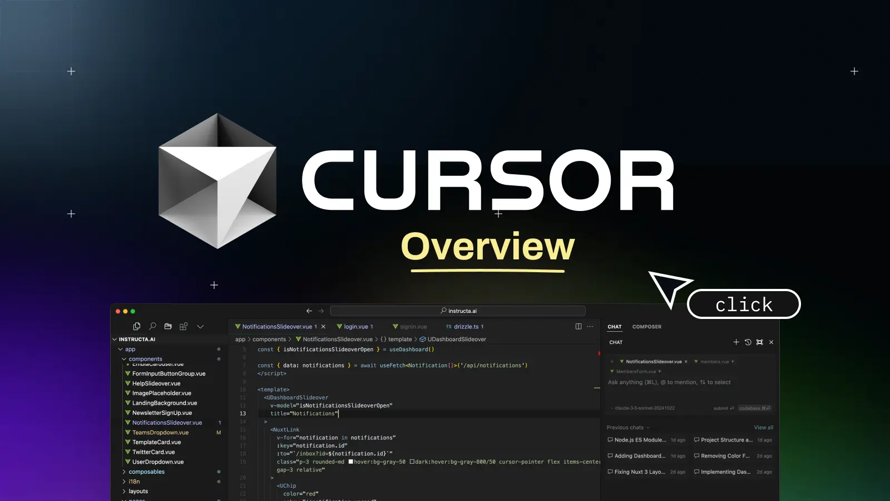
Developers already had plenty of places to ask AI for help. Cursor’s opportunity was more specific: bring that assistance into the editor where the work actually happens. Built by Anysphere, the startup founded in 2022, Cursor combines a familiar coding environment with tools that can explain a codebase, suggest changes, and carry out development tasks.
That makes it a strong startup to study—not simply because it attracted investment, but because it turned frequent, practical use into substantial subscription revenue.
The evidence behind its success
In its June 2025 Series C announcement, Anysphere reported raising $900 million at a $9.9 billion valuation. It also said Cursor had exceeded $500 million in annual recurring revenue and was used by developers at more than half of Fortune 500 companies.
Those figures need careful interpretation. Annual recurring revenue is a subscription run-rate measure, not profit or necessarily revenue already recognized. Usage by developers at a company does not automatically mean that company has purchased an organization-wide deployment. Even with those qualifications, the reported revenue provides a stronger commercial signal than funding alone.
These are dated, company-reported milestones from June 2025, rather than a claim about Cursor’s current valuation or financial position.
Why the editor became the product
Cursor is built on the open-source Visual Studio Code codebase. That gives developers a familiar starting point instead of asking them to adopt an entirely unfamiliar workspace. Its differentiation sits in AI-assisted software development: assistance that can use relevant project context and propose changes within the working environment.
Consider a developer changing an API response. The work may involve updating the endpoint, adjusting types, finding affected callers, and fixing tests. A separate chatbot can offer advice, but the developer still has to move information between systems. Cursor’s appeal is reducing that back-and-forth through codebase-aware AI assistance.
The value is not that every generated change is correct. It is that the developer can move from an intention to a reviewable implementation with less manual searching and copying. Human review, testing, and security checks remain necessary.
How adoption turns into a business
Cursor follows a recognizable developer tool adoption pattern: an individual tries the product, finds it useful, and brings it into a team. Free access lowers the initial barrier; paid plans monetize continued use and organizational requirements.
- Individual subscriptions: Developers pay for access and usage allowances that support regular work.
- Team plans: Shared billing and administrative controls make adoption easier to manage beyond one person.
- Enterprise requirements: Security reviews, identity management, and contractual assurances become part of the buying decision.
This is where enterprise software procurement changes the sales conversation. An enthusiastic engineer may establish demand, but a larger buyer also needs answers about source-code handling, access controls, and data retention. Cursor’s security documentation is relevant to that evaluation; buyers should check the policies and settings applicable to their deployment.
The costs behind the growth
The difficult part of an AI coding subscription is that heavy usage can carry significant model-serving costs. An agent working through multiple files may make many model requests. Pricing must balance a useful customer allowance with sustainable AI inference costs.
Competition also remains intense. GitHub Copilot, model providers, and other development tools compete for the same daily workflow. Cursor’s advantage therefore depends on product quality, reliability, and developer trust—not merely access to a capable model.
The useful lesson for founders is concrete: Anysphere did not have to invent software development or build every underlying model itself. It identified a repeated, expensive activity and made assistance accessible where that activity happens. Its reported subscription traction shows commercial demand; whether that growth produces durable profits is a separate question.