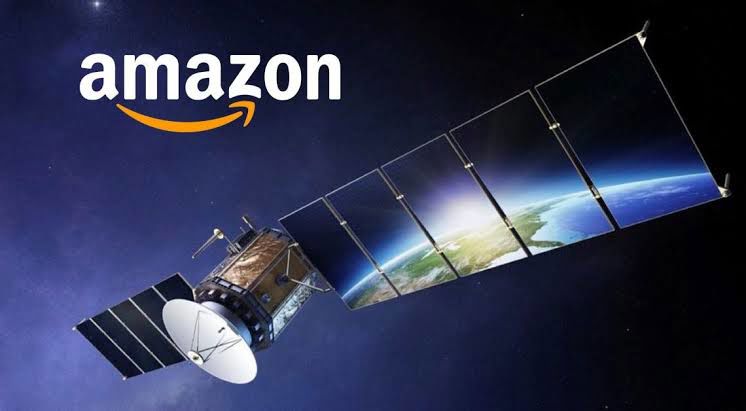
Amazon has taken a major step toward building its own satellite broadband network, launching its first 27 full-scale Project Kuiper satellites into low Earth orbit on April 28, 2025. A United Launch Alliance Atlas V rocket carried the spacecraft from Cape Canaveral, Florida.
The launch moves Kuiper beyond its earlier in-orbit tests and into the construction phase of a constellation intended to bring internet access to customers outside the reach of conventional wired networks. The satellites will need to be checked and brought into their planned positions before they can contribute to service; one launch does not create a working broadband network on its own.
A new contender in satellite broadband
Amazon has outlined plans for a Project Kuiper constellation of 3,236 satellites. The network is intended to connect with compact customer terminals on the ground, with satellites relaying traffic between users and terrestrial internet infrastructure. Amazon has also described optical inter-satellite links, which can pass data between satellites using lasers rather than routing every connection through a ground station.
That puts Kuiper in direct competition with SpaceX’s Starlink, which already operates a large low Earth orbit network. The companies are pursuing the same broad market—broadband for homes, businesses and remote areas—but Kuiper is at an earlier stage of deployment. Amazon’s existing cloud and logistics businesses could help it sell connectivity to enterprise and government customers, though the launch itself offers no evidence yet of how the service will perform in routine use.
Deployment is the next test
Amazon’s first production satellites follow two prototype spacecraft launched in 2023 to test the network’s technology. The new spacecraft are the first larger batch intended for the operational system. Reaching the planned scale will require many more launches, coordination across the constellation, and ground equipment capable of connecting customers to the satellites.
Satellite internet can be useful where laying fiber is difficult or uneconomical, but it still faces practical questions: the cost of user equipment, coverage and capacity in busy areas, latency, and the pace at which providers can add satellites. Amazon has promoted customer terminals designed for different uses, from smaller devices to equipment aimed at businesses. Their real-world value will depend on pricing and service availability, not simply the number of satellites in orbit.
For now, the April launch is a concrete start to a project that has spent years in development. The measure of Kuiper’s progress will be how reliably Amazon can keep adding spacecraft and turn that initial deployment into a usable satellite broadband service.