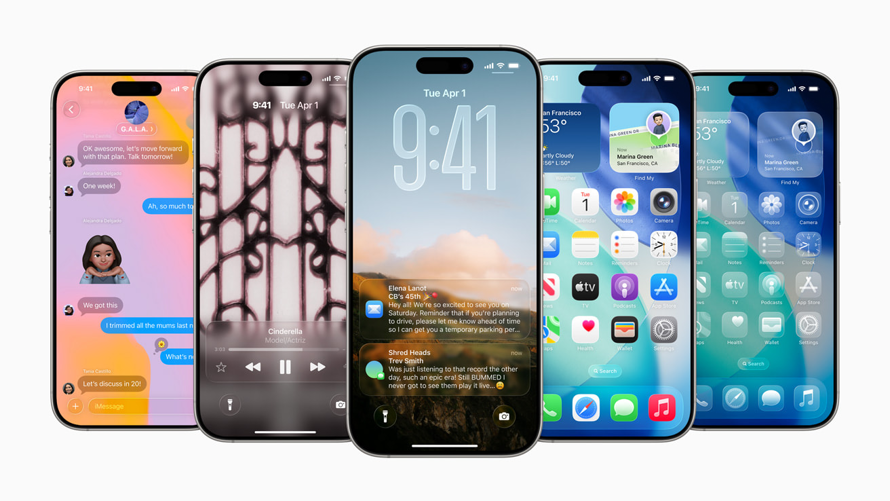
Cupertino, June 9, 2025 — Apple has introduced iOS 26, a major iPhone software update that pairs a redesigned interface with new Apple Intelligence features. The announcement came at the company’s Worldwide Developers Conference, alongside updates to its other operating systems.
The most visible change is Liquid Glass, a translucent design treatment Apple is bringing across its software platforms. Menus and controls use layered, glass-like effects, while interface elements are intended to adapt to what is on screen rather than sit as opaque blocks over content. Apple says the redesign reaches the Lock Screen, Home Screen, apps and system controls. How well the effects work in everyday use will depend on the final software and individual app updates, but the change is broader than a simple icon refresh.
A new naming system and a wider platform redesign
Apple is also moving to a year-based naming system for its operating systems. That makes the new releases iOS 26, iPadOS 26, macOS Tahoe 26, watchOS 26, tvOS 26 and visionOS 26, aligning their names with the year in which most users will use them. The shift replaces the sequential version numbers customers might otherwise have expected.
The shared design language gives Apple a more consistent look across iPhone, Mac, iPad, Watch, TV and Vision Pro. That could make the transition feel more cohesive, though it also means people using several Apple devices will encounter a substantial visual change across much of the ecosystem at once.
Apple Intelligence gains more ways into everyday apps
On iPhone, Apple highlighted live translation in Messages, Phone and FaceTime. In Messages, translations can appear as people chat across languages; in calls, the feature is designed to translate spoken conversation. These capabilities are part of Apple Intelligence, so availability depends on compatible hardware, supported languages and regional rollout details.
Apple also showed expanded visual intelligence features. Users will be able to ask questions about what appears on their screen and take actions based on the information, such as looking up an item or adding an event. The company is opening some of its model tools to developers as well, potentially allowing third-party apps to use Apple’s on-device capabilities for tasks such as image creation and text assistance.
These announcements extend Apple’s effort to make AI features feel like functions within familiar apps rather than a separate chatbot destination. The practical test will be how many features arrive at launch, which devices support them, and whether the translations and contextual actions are dependable enough for routine use.
When users can try it
Apple made the developer beta on June 9, the day of the announcement, with a public beta planned for July. The company said the general release would arrive in fall 2025. Developers and early testers can explore the redesign before then, but beta software may contain bugs and is not the best choice for a device needed for work or daily reliability.
With iOS 26, Apple is making two substantial bets at once: a visual reset across its platforms and a deeper integration of Apple Intelligence into core apps. The first will be apparent as soon as users install the update; the success of the second will depend on the features’ availability and how useful they prove beyond the keynote demonstrations.