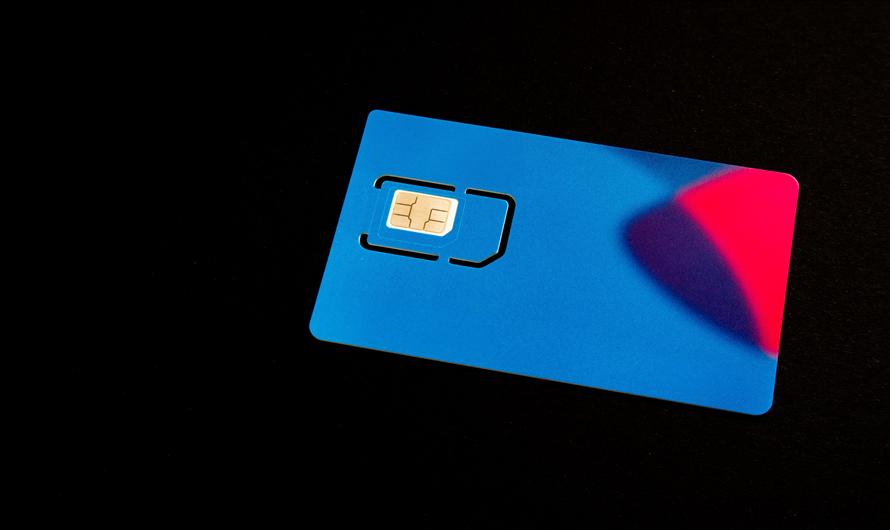
Connected devices are becoming a larger part of industrial operations, from remote monitoring systems to vehicle tracking and utility infrastructure.
Transforma Insights has projected that active IoT devices could reach 29.4 billion by 2030, which makes reliable cellular connectivity a practical concern for businesses operating at scale.
Standard consumer SIM cards are built for everyday phones and tablets, not for equipment exposed to vibration, moisture, dust, temperature swings, or long periods without physical maintenance. Industrial SIM cards are designed to close that gap.
They support reliable network access for connected equipment in demanding environments where downtime can be expensive, unsafe, or difficult to fix.
What Is a SIM Card and How Do Industrial SIM Cards Differ?
What is a SIM card?
A SIM card stores the authentication credentials and carrier information a device needs to connect to a cellular network.
Each SIM contains a unique subscriber identity and secure authentication data, allowing the network to verify that the device is authorized to connect.
This process happens when the device powers on or attempts to attach to the network. Without successful authentication, the device cannot reliably send data, receive commands, or maintain service.
In industrial systems, that small chip plays a central role in keeping equipment connected across distributed sites.
For businesses deploying connected equipment in harsh or remote environments, providers such as Trafalgar Wireless offer industrial SIM card services built for applications that require stable cellular access, centralized management, and long-term reliability.
Standard SIM card vs. industrial SIM card
Standard consumer SIMs are usually intended for personal devices used in controlled conditions. Industrial SIM cards are built for longer service life and more demanding operating environments.
Many industrial SIMs are rated for extended temperature ranges, commonly from -40°C to +105°C, while some specialized embedded SIM products also support long data retention for equipment expected to remain in service for years.
The physical construction also differs. Industrial-grade SIMs often use reinforced materials, protective coatings, and more durable contact designs to resist corrosion, humidity, and mechanical stress.
Some can be soldered directly into machinery or circuit boards, which helps prevent dislodging from vibration and adds stability in fixed installations.
Read and write endurance is another important difference. Industrial SIMs are designed for machine-to-machine communication patterns, where devices may attach, update, report, and reauthenticate repeatedly over long periods.
This makes them better suited for industrial IoT applications than a standard SIM designed mainly for consumer mobile use.
Why Industrial Environments Need Specialized SIM Cards
Industrial devices often operate where physical access is limited and environmental stress is constant. Remote pipelines, agricultural sensors, mining equipment, weather stations, refrigerated containers, and roadside tracking devices may face freezing temperatures, heat, vibration, moisture, dust, or electromagnetic interference.
A consumer SIM may work during initial testing but fail after months of vibration, corrosion, or temperature cycling.
That creates problems beyond the cost of replacing the card. A failed SIM can interrupt sensor data, stop remote commands, delay maintenance alerts, and require a site visit that costs far more than the component itself.
Industrial SIM cards are built to reduce those risks. They are especially valuable when devices must stay connected for years with little hands-on maintenance.
Key Features of Industrial SIM Cards
Extreme temperature resistance
Industrial SIM cards are designed to keep working across wider temperature ranges than standard consumer SIMs.
Many industrial and embedded SIM products support operating ranges from -40°C to +105°C, making them suitable for outdoor equipment, refrigerated logistics, industrial machinery, and energy infrastructure.
This matters because temperature changes can affect memory stability, contacts, and physical materials.
Industrial-grade construction helps the SIM maintain authentication and data integrity even when devices operate outside typical indoor conditions.
Shock and vibration durability
Industrial equipment often moves, shakes, or sits near machinery that creates constant vibration. Fleet trackers, rail systems, agricultural machines, and manufacturing equipment all expose SIMs to physical stress.
Industrial SIMs are built with stronger materials and contact stability in mind. Embedded or solderable versions add another layer of protection because they are mounted directly to the circuit board rather than sitting in a removable tray.
This reduces the risk of connection loss caused by movement or impact.
Extended lifespan and data retention
Many industrial IoT deployments are expected to last for a decade or more. Replacing SIMs in thousands of field devices can be expensive, especially when devices are spread across
remote sites.
Industrial SIMs are designed for longer operating life, higher endurance, and stronger data retention than typical consumer cards.
Some industrial eSIM products are built for data retention of up to 15 years, depending on operating conditions and product specifications.
Multi-network connectivity and automatic failover
Industrial IoT devices often need to connect across different regions, carrier footprints, and network conditions. Multi-network SIMs can access more than one carrier network, allowing devices to connect to the strongest available signal where supported.
Automatic failover helps maintain uptime when the primary network becomes weak or unavailable. Depending on the SIM and platform, failover may happen through multi-IMSI technology, roaming agreements, or eSIM profile changes.
This is useful for mobile assets, remote sites, and applications where a single carrier network may not be enough.
Stronger security controls
Industrial SIM cards can support secure authentication, private network access, traffic controls, and centralized device management. These features help businesses limit unauthorized access and monitor how devices connect.
Security is especially important for infrastructure, utilities, manufacturing, and logistics systems. A connected industrial device may transmit sensitive operational data or control equipment remotely, so SIM-level security and network policy controls should be part of the broader IoT security plan.
SIM types and form factors for industrial use
Industrial SIM cards are available in several form factors, including 2FF, 3FF, 4FF, and embedded MFF2 formats.
Removable SIMs are easier to install or replace, while embedded SIMs are better suited for compact devices, vibration-heavy use, and equipment that should not be opened in the field.
eSIM technology also allows remote profile management. This means a device can change carrier profiles over the air without a physical SIM swap, which simplifies large deployments and reduces maintenance work.
Primary Applications of Industrial SIM Cards
Industrial automation and manufacturing
Factories use industrial SIMs to connect sensors, programmable logic controllers, gateways, and robotic equipment. These devices transmit operating data that supports equipment monitoring, process control, and predictive maintenance.
For example, a conveyor belt sensor can report abnormal speed changes before a failure causes production downtime. Manufacturing lines can also send data to cloud platforms for monitoring energy use, machine health, and environmental conditions.
Industrial SIMs are also useful for mobile maintenance tools, augmented reality support, and temporary production setups where wired connectivity is impractical.
Remote monitoring and control systems
Oil rigs, mines, pipelines, solar farms, and water systems often sit in locations where physical inspection is difficult or expensive. Industrial routers and gateways equipped with IoT SIM cards can collect sensor data and send it over 4G, LTE-M, NB-IoT, or 5G networks.
Operators can monitor pressure, temperature, flow, voltage, or equipment status from a central location. They may also adjust valves, restart equipment, or trigger maintenance actions remotely.
This reduces site visits and helps teams respond before a fault becomes a shutdown.
Fleet management and vehicle tracking
Fleet systems rely on industrial SIMs to transmit location, speed, mileage, route, driver behavior, fuel usage, and engine data.
These connections support GPS tracking, route optimization, geofencing alerts, and maintenance planning.
Industrial SIMs are useful in fleet applications because vehicles move across coverage areas and experience vibration, temperature shifts, and power cycling. Multi-network access can help maintain service as vehicles travel between regions.
Smart meters and utility infrastructure
Smart meters for electricity, gas, and water often remain in place for many years. They need connectivity that can support regular reporting without frequent physical service.
Industrial SIMs and eSIMs help utility providers collect usage data, detect outages, monitor pressure or flow, and support remote meter reading.
Multi-network support can reduce the risk of service gaps, especially across large service areas.
Agriculture and environmental monitoring
Precision agriculture uses connected sensors to monitor soil moisture, temperature, salinity, pH, livestock conditions, and equipment status. These systems help farmers make better decisions about irrigation, feeding, crop protection, and field operations.
Automated irrigation systems can use sensor data to water only when needed.
Recent research on intelligent irrigation systems has reported water consumption reductions compared with conventional irrigation methods, although results depend on crop type, system design, and local conditions.
Environmental monitoring systems also rely on industrial SIMs to transmit data from weather stations, air quality sensors, flood monitors, and remote cameras.
Main Advantages of Industrial SIM Cards Over Consumer SIMs
Better coverage options
Industrial SIMs often support multi-network connectivity, giving devices access to more than one carrier network where available. This improves the chance of maintaining service in factories, ports, rural locations, offshore environments, or moving vehicles.
Coverage still depends on local network availability, device hardware, antenna quality, and carrier agreements. However, multi-network access gives businesses more flexibility than a SIM tied to a single network.
Remote management and over-the-air provisioning
Remote SIM provisioning allows businesses to update SIM profiles without sending technicians to each device. This is especially useful for large deployments, hazardous sites, or equipment installed in hard-to-reach places.
Centralized platforms can also show usage, status, alerts, and lifecycle events.
Teams can suspend inactive SIMs, adjust plans, troubleshoot connection issues, and manage thousands of devices from one dashboard.
Easier scaling for large deployments
Industrial IoT projects often involve hundreds or thousands of devices across several sites or regions. Managing separate SIMs, carriers, and plans for each location can quickly become difficult.
Industrial SIM platforms simplify scaling by supporting bulk activation, shared policies, regional profiles, and unified reporting.
eSIM technology can also help manufacturers use a single device design across multiple markets, then assign the right connectivity profile after deployment.
Cost control through data pooling
Many IoT devices use small amounts of data, while others may send larger updates, video, logs, or diagnostics.
Data pooling allows multiple devices to share one combined allowance, reducing waste from unused individual plans.
This can make billing more predictable and help businesses avoid overpaying for devices that use very little data. It also supports large fleets where usage varies by device, season, or operating conditions.
Future-ready connectivity with eSIM technology
eSIM technology gives businesses more control over long-term connectivity. Devices can be provisioned, updated, or moved to different network profiles remotely, reducing the need for physical SIM replacement.
This is valuable for connected products with long lifecycles. As networks change and coverage needs evolve, eSIM support can help devices remain usable without redesigning hardware or sending technicians into the field.
Conclusion
Industrial SIM cards are a practical foundation for connected equipment that needs to operate reliably outside controlled consumer environments.
They offer stronger temperature tolerance, better durability, longer service life, multi-network access, remote management, and more flexible deployment options than standard SIM cards.
The right choice depends on the use case, location, device design, expected lifespan, data needs, and management requirements.
For factories, fleets, utilities, agriculture, energy, and remote monitoring systems, industrial SIM cards help reduce connectivity failures and make IoT deployments easier to manage over time.


Leave a Comment