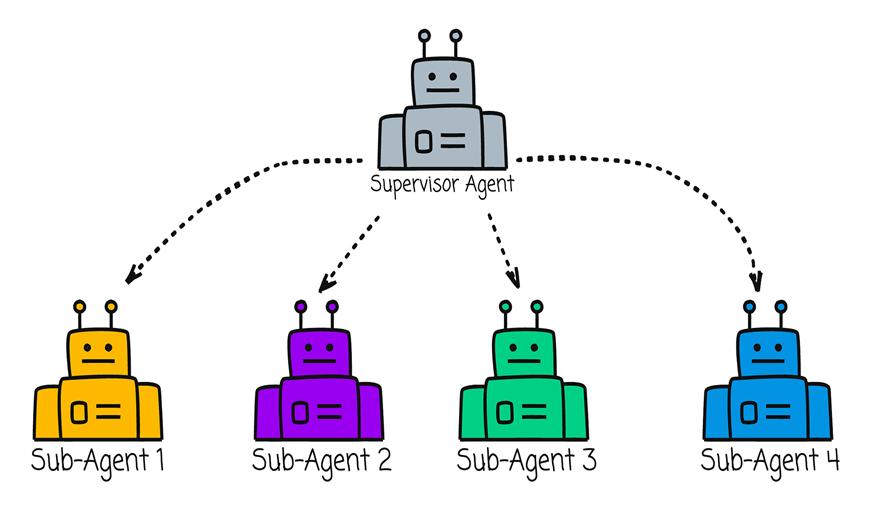
Artificial Intelligence is rapidly moving beyond single-chat assistants toward collaborative AI systems capable of solving complex problems. One of the most exciting developments in this space is Multi-Agent Systems (MAS) with Claude, where multiple AI agents work together, each handling specialized tasks to achieve a common goal.
Anthropic's Claude platform has introduced advanced capabilities that make multi-agent architectures more practical and powerful than ever. Instead of relying on one large model to handle every task, organizations can now create AI teams that collaborate, reason, and execute tasks in parallel.
What Are Multi-Agent Systems?
A Multi-Agent System (MAS) is a collection of autonomous AI agents that interact and collaborate to solve problems. Each agent has its own responsibilities, context, tools, and objectives.
Think of it as a company:
- A manager plans the work.
- Researchers gather information.
- Developers implement solutions.
- Reviewers verify the results.
Similarly, Claude-based multi-agent systems divide complex tasks into smaller, manageable pieces.
Why Multi-Agent Systems Matter
Traditional single-agent AI systems often face limitations such as:
- Context overload
- Sequential processing
- Limited specialization
Reduced performance on complex tasks
Multi-agent systems address these challenges by enabling:
1. Parallel Processing
Multiple agents can work simultaneously on different aspects of a task, significantly improving productivity.
2. Context Isolation
Each agent operates within its own context window, preventing information overload and maintaining better reasoning quality.
3. Specialized Expertise
Different agents can be optimized for specific responsibilities such as coding, research, planning, or validation.
4. Improved Accuracy
Collaborative agents can cross-check each other's work and reduce errors.
According to Anthropic, multi-agent architectures perform exceptionally well when tasks require parallel execution, context management, and specialization. However, they also consume more computational resources and tokens than single-agent systems.
Understanding Claude's Multi-Agent Architecture
A typical Claude multi-agent system follows an Orchestrator-Worker Pattern.
Orchestrator Agent
The orchestrator acts as the project manager and is responsible for:
- Breaking down tasks
- Assigning work
- Monitoring progress
- Combining results
Specialized Subagents
Subagents handle dedicated responsibilities:
- Research Agent
- Coding Agent
- Testing Agent
- Documentation Agent
- Reviewer Agent
User Request
      |
      ▼
Orchestrator Agent
      |
 ┌────┼─────┐
 ▼    ▼     ▼
Research Coding Review
 Agent   Agent  Agent
      |
      ▼
 Final Response
This architecture allows each agent to focus on a single responsibility while maintaining independent contexts.
When Should You Use Multi-Agent Systems?
Multi-agent systems are most effective in the following situations:
Large Research Tasks
Complex research often requires exploring multiple sources simultaneously.
Software Development
Separate agents can manage architecture, implementation, testing, and documentation.
Business Automation
Different agents can handle operations, analytics, reporting, and customer interactions.
Financial Analysis
Agents can collaborate to generate reports, perform risk assessments, and validate insights.
Enterprise Workflows
Departments such as HR, Legal, Finance, and Operations can each be represented by specialized AI agents.
When Not to Use Multi-Agent Systems
Despite their advantages, multi-agent systems are not always the best solution.
Avoid using them when:
- Tasks are simple.
- A single AI agent can handle the workflow.
- Cost optimization is a priority.
- The overhead of coordination outweighs the benefits.
Anthropic emphasizes starting with a well-designed single-agent system before introducing multiple agents.
Building a Multi-Agent System with Claude
Step 1: Define the Objective
Example:
"Create a market research report for an AI startup."
Step 2: Create Specialized Agents
- Research Agent
- Competitor Analysis Agent
- Data Validation Agent
- Report Writing Agent
Step 3: Design the Orchestrator
The orchestrator:
- Divides the task.
- Assigns work.
- Receives outputs.
- Produces the final report.
Step 4: Enable Communication
Agents exchange:
- Findings
- Summaries
- Validations
- Feedback
Step 5: Generate Final Output
The orchestrator merges all outputs into a single response.
Example Workflow
User Request:
"Build a complete product launch strategy."
Agent Collaboration:
| Agent | Responsibility |
|---|---|
| Planner | Breaks down the project |
| Researcher | Collects market data |
| Marketing Agent | Creates campaigns |
| Financial Agent | Estimates budget |
| Reviewer | Verifies recommendations |
The orchestrator then generates a comprehensive launch strategy.
Real-World Applications of Claude Multi-Agent Systems
Software Engineering
Multiple coding agents can work on different modules simultaneously.
Customer Support
Dedicated agents can manage billing, technical support, and product information.
Healthcare
Agents can process patient records, analyze reports, and summarize findings.
Research Automation
Parallel agents can investigate multiple sources and produce comprehensive reports.
Financial Services
Claude's enterprise ecosystem already includes specialized agents for valuation, market research, and operational workflows.
Benefits of Using Claude for Multi-Agent Systems
Scalability
Handle larger and more complex workflows.
Better Accuracy
Cross-validation improves reliability.
Faster Execution
Parallel task processing saves time.
Reduced Context Pollution
Independent contexts improve reasoning quality.
Modular Design
New agents can be added without redesigning the entire system.
Challenges and Considerations
Higher Token Consumption
Multi-agent systems may consume significantly more tokens than single-agent architectures.
Increased Complexity
Managing communication between agents requires careful orchestration.
Monitoring and Debugging
Tracking multiple agents can become difficult without proper observability tools.
Cost Management
Organizations should carefully evaluate whether the additional performance justifies the extra computational expense.
Best Practices for Building Multi-Agent Systems with Claude
Start with a single-agent solution first.
- Introduce agents only when complexity increases.
- Keep each agent specialized.
- Use clear communication protocols.
- Implement validation and review agents.
- Monitor costs and token usage.
Design for scalability and fault tolerance.
The Future of Multi-Agent AI Systems
The future of AI is moving toward collaborative intelligence rather than isolated assistants. Multi-agent systems enable organizations to build AI teams that reason, coordinate, and execute tasks much like human teams.
As Claude continues to evolve with advanced orchestration capabilities and managed agents, multi-agent architectures are expected to become a foundational component of enterprise AI solutions.
Conclusion
Multi-Agent Systems with Claude represent a major step toward autonomous and collaborative AI. By combining specialized agents with intelligent orchestration, businesses can solve complex problems more efficiently, improve accuracy, and automate sophisticated workflows.
However, multi-agent systems should be implemented strategically. For many use cases, a single agent remains sufficient. The true value of multi-agent architectures emerges when tasks require specialization, parallelism, and context isolation.
Organizations that learn to orchestrate AI teams today will be better positioned to leverage the next generation of intelligent automation.


Leave a Comment
1 Comments