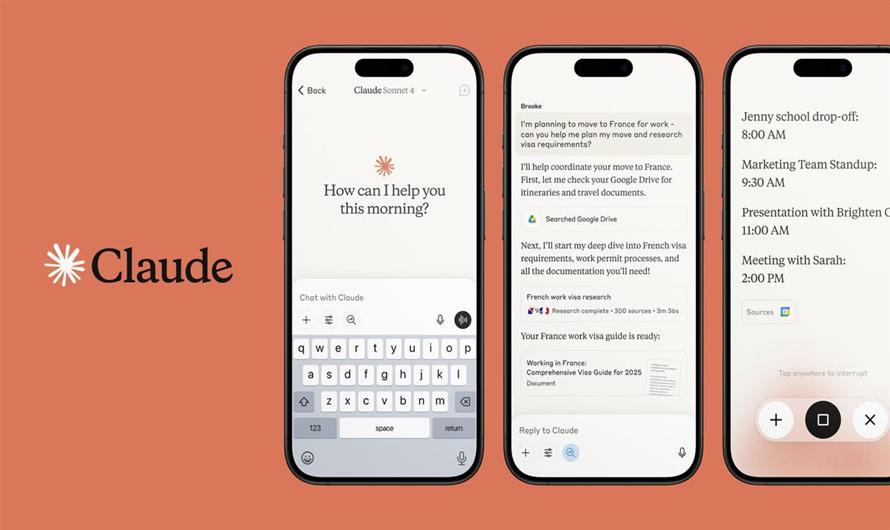
Artificial Intelligence is evolving rapidly, and one of the most talked-about AI assistants today is Claude. Built by Anthropic, Claude AI is designed to help users write content, answer questions, generate code, summarize documents, and assist with research while focusing heavily on safety and ethical AI behavior.
Many people compare Claude with tools like ChatGPT, but Claude follows a slightly different philosophy — prioritizing “helpful, honest, and harmless” responses through a system called Constitutional AI.
In this blog, we’ll explore what Claude AI is, how it works, its features, advantages, limitations, and why it has become one of the leading AI assistants in the market.
What Is Claude AI?
Claude is a family of large language models (LLMs) created by Anthropic, an AI research company founded by former OpenAI researchers including Dario Amodei and Daniela Amodei.
Claude is designed to understand human language and generate natural, conversational responses. It can:
- Answer questions
- Write articles and emails
- Generate programming code
- Summarize long documents
- Analyze PDFs and images
- Assist with research
- Translate languages
- Help automate workflows
The AI is named after Claude Shannon, often called the “father of information theory.” (Encyclopedia Britannica)
What Makes Claude AI Different?
The biggest difference between Claude and many other AI systems is its focus on AI safety and alignment.
Instead of relying only on human feedback, Anthropic uses a method called Constitutional AI to train Claude.
Constitutional AI Explained
Constitutional AI means the model follows a predefined set of principles or “constitution” during training.
These principles guide Claude to:
- Avoid harmful responses
- Be more truthful
- Reduce toxic or dangerous content
- Respond ethically
- Respect user safety
Rather than humans manually correcting every bad answer, Claude learns to critique and improve its own responses according to these rules.
This approach aims to make AI systems more reliable and safer for public use.
How Does Claude AI Work?
Claude AI works using a technology called a Large Language Model (LLM).
At a high level, here’s how it works:
1. Training on Massive Data
Claude is trained on huge amounts of:
- Public internet text
- Books
- Articles
- Code repositories
- Licensed datasets
The model learns language patterns, grammar, reasoning, and contextual relationships from this data.
2. Transformer Architecture
Claude uses a transformer-based neural network architecture, similar to many modern AI systems.
The transformer helps the model:
- Understand sentence context
- Predict the next word
- Maintain conversation flow
- Handle long documents
- This allows Claude to generate human-like responses.
3. Constitutional AI Training
After initial training, Anthropic applies Constitutional AI methods.
Claude:
- Generates responses
- Reviews its own answers
- Compares them against safety principles
- Revises responses when necessary
This process helps the model become more aligned with human values and safer interactions.
4. Reinforcement Learning
Claude also uses reinforcement learning techniques to improve response quality.
The system learns which responses are:
- More useful
- More accurate
- Safer
- Better aligned with user intent
Over time, this improves conversational quality and reasoning ability.
Claude AI Model Families
Anthropic has released multiple Claude model versions over time.
Some major model families include:
| Model | Purpose |
|---|---|
| Claude Haiku | Fast and lightweight tasks |
| Claude Sonnet | Balanced performance and reasoning |
| Claude Opus | Advanced reasoning and coding |
| Claude 4 Series | Latest generation with stronger capabilities |
Recent Claude models support:
- Text input/output
- Image understanding
- Large context windows
- Coding assistance
- Multilingual support (Claude API Docs)
Key Features of Claude AI
Large Context Window
Claude can process very large amounts of text in a single conversation.
This is useful for:
- Long PDFs
- Research papers
- Contracts
- Large codebases
Some Claude models support context windows up to 200K tokens.
Strong Coding Assistance
Claude is widely used for:
- Code generation
- Debugging
- Refactoring
- Documentation
- SQL queries
- API integration
Many developers prefer Claude for long-form coding discussions and project analysis.
Natural Writing Style
Claude often produces:
- Human-like writing
- Clear explanations
- Structured content
- Professional tone
This makes it useful for bloggers, marketers, students, and businesses.
Document Analysis
Claude can analyze:
- PDFs
- Reports
- Legal documents
- Spreadsheets
- Research papers
It can summarize information and extract important insights.
Vision Capabilities
Modern Claude models can process images alongside text. (Claude API Docs)
This enables tasks like:
- Reading charts
- Understanding screenshots
- Analyzing diagrams
- Extracting visual information
Advantages of Claude AI
- Safer Responses
- Constitutional AI helps reduce harmful or toxic outputs.
- Excellent Long-Form Writing
- Claude performs strongly in detailed explanations and content generation.
- Strong Coding Support
- Developers often use Claude for software engineering workflows.
- Better Context Handling
- Large context windows help Claude remember longer conversations.
- Ethical AI Focus
- Anthropic emphasizes transparency and responsible AI development.
Limitations of Claude AI
Despite its strengths, Claude also has limitations.
- Can Still Make Mistakes
- Like all AI systems, Claude can generate incorrect or misleading information.
- Sometimes Overly Cautious
- Because of safety training, Claude may refuse harmless prompts or become too restrictive.
- Knowledge Cutoff
- Claude may not always know the latest real-time events unless connected to live web data.
- AI Hallucinations
- It can occasionally invent facts, references, or sources.
Claude AI vs ChatGPT
| Feature | Claude AI | ChatGPT |
|---|---|---|
| Developer | Anthropic | OpenAI |
| Main Focus | Safety & alignment | General-purpose AI |
| Writing Style | More structured and cautious | More flexible and conversational |
| Long Context | Very strong | Strong |
| Coding | Excellent | Excellent |
| Safety Approach | Constitutional AI | RLHF + safety systems |
Both are powerful AI assistants, but they differ in personality, safety philosophy, and response style.
Real-World Uses of Claude AI
Businesses and individuals use Claude for:
- Content writing
- Customer support
- Software development
- Research assistance
- Legal document review
- Marketing automation
- Education
- Data summarization
Anthropic is also expanding Claude into enterprise and business tools.
The Future of Claude AI
Anthropic continues improving Claude with:
- Better reasoning
- More accurate coding
- Safer AI behavior
- Larger context windows
- Enterprise integrations
As AI adoption grows, Claude is becoming a major competitor in the AI assistant market alongside ChatGPT, Gemini, and other large language models.
Conclusion
Claude is one of the most advanced AI assistants available today. Built by Anthropic, it combines powerful language capabilities with a strong emphasis on AI safety through Constitutional AI.
Claude can help with writing, coding, research, summarization, and business workflows while aiming to provide more ethical and reliable responses.
Although it still has limitations like hallucinations and occasional over-cautiousness, Claude represents an important step toward safer and more responsible AI systems.
For developers, businesses, and content creators, Claude AI is becoming a valuable productivity and automation tool in the growing AI ecosystem.
Learn more from Anthropic Official Website and Claude Documentation.


Leave a Comment