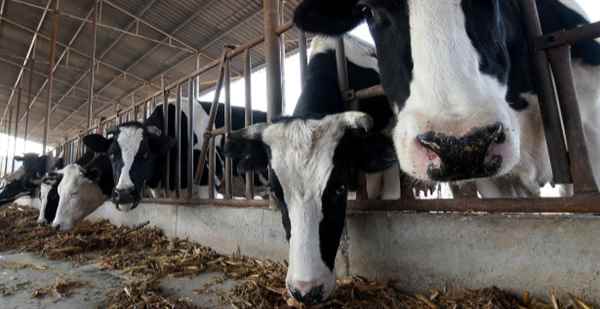
Recently, Chinese scientists have made headlines by successfully cloning "super cows". These cows have been genetically modified to produce more milk and grow larger and faster than traditional breeds. This breakthrough has the potential to revolutionize the dairy industry and provide a solution to the growing demand for food as the world's population continues to increase.
The cloning process used by Chinese scientists is called somatic cell nuclear transfer (SCNT). It involves taking a nucleus from a cell of an animal and transferring it into an egg that has had its nucleus removed. The resulting egg is then implanted into a surrogate mother, and if successful, it will develop into a clone of the original animal.
In the case of the "super cows", the scientists have used SCNT to clone cows that have been genetically modified to produce more milk and grow faster and larger than traditional breeds. This is a significant breakthrough in the field of animal breeding, as it allows for the creation of new breeds with specific desired traits.
The "super cows" have already been introduced into the Chinese dairy industry and have been a great success. They produce up to 20% more milk than traditional breeds and are able to reach maturity faster, reducing the time between calving and when they can be bred again. This has led to a significant increase in the efficiency of dairy production, which is crucial in meeting the growing demand for food in a world where the population is expected to reach nearly 10 billion by 2050.
One of the major benefits of cloning "super cows" is the ability to create uniform breeds. By cloning animals that have desirable traits, scientists can create a population of animals that all have the same traits, ensuring that they are consistent in quality and efficiency. This is a significant advantage over traditional breeding methods, where the offspring can vary greatly in traits, even within the same breed.
Another benefit of cloning "super cows" is the ability to save endangered breeds. By cloning animals, scientists can preserve the genetic material of endangered breeds and use it to create new populations that can be reintroduced into the wild. This can help to conserve the biodiversity of our planet and ensure that future generations have the opportunity to enjoy the benefits of these animals.
However, cloning "super cows" is not without controversy. Some people are concerned about the ethical implications of cloning animals, as it raises questions about what it means to be a "natural" species. Additionally, there are concerns about the potential impact of these cows on the environment, as they may have a greater carbon footprint due to their larger size and higher levels of milk production.
Despite these concerns, the cloning of "super cows" is an exciting development in the field of animal breeding and agriculture. The potential benefits of this technology are vast, and it will be interesting to see how it evolves and impacts the world in the years to come.
Conclusion
The cloning of "super cows" by Chinese scientists is a major breakthrough that has the potential to revolutionize the dairy industry and provide a solution to the growing demand for food as the world's population continues to increase. While there are still ethical and environmental concerns to be addressed, the benefits of this technology are clear and the potential is enormous.


Leave a Comment
1 Comments