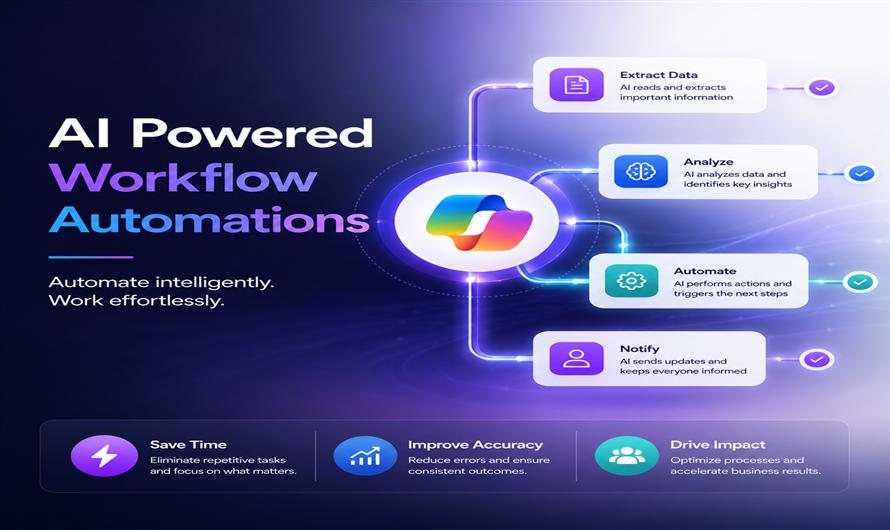
Organizations are constantly looking for ways to improve efficiency, reduce operational costs, and deliver better customer experiences. Traditional manual processes often slow down productivity, increase errors, and limit scalability. This is where AI-powered workflow automation services emerge as a game-changing solution.
By combining artificial intelligence with workflow automation, businesses can automate repetitive tasks, make data-driven decisions, and optimize end-to-end processes. From handling approvals and managing documents to enhancing customer service and forecasting trends, AI-powered automation is redefining how organizations operate.
What Are AI-Powered Workflow Automation Services?
AI-powered workflow automation services refer to the use of artificial intelligence technologies integrated with automation tools to streamline and manage business processes with minimal human intervention.
Unlike traditional automation that follows predefined rules, AI-driven automation can:
- Learn from historical data.
- Identify patterns and trends.
- Make intelligent recommendations.
- Predict outcomes.
- Adapt to changing business requirements.
- Continuously improve performance over time.
These capabilities allow organizations to automate complex workflows that previously required manual effort and human judgment.
Why Businesses Need AI Workflow Automation
Many organizations still rely on spreadsheets, emails, paper forms, and disconnected systems to manage daily operations. These outdated methods often lead to:
- Delayed approvals.
- Data entry errors.
- Lack of visibility.
- Increased operational costs.
- Employee frustration.
- Poor customer experiences.
- Limited scalability.
AI-powered workflow automation addresses these challenges by creating intelligent, connected, and efficient business processes.
Key Features of AI-Powered Workflow Automation Services
Intelligent Process Automation
AI can analyze workflows and automate repetitive tasks such as data entry, routing requests, invoice processing, and status updates.
Predictive Decision-Making
Machine learning algorithms identify patterns in historical data to predict bottlenecks, forecast outcomes, and support proactive decision-making.
Natural Language Processing (NLP)
NLP enables systems to understand and process human language, making chatbots, virtual assistants, and document extraction tools more effective.
Document Intelligence
AI can extract, classify, and validate information from invoices, contracts, forms, and other documents automatically.
Workflow Optimization
Automation platforms continuously monitor processes to identify inefficiencies and recommend improvements.
Real-Time Insights
Integrated dashboards provide visibility into workflow performance, helping leaders track KPIs and make informed decisions.
Benefits of AI-Powered Workflow Automation Services
Increased Productivity
Employees spend less time on repetitive tasks and more time focusing on strategic initiatives.
Faster Decision-Making
Automated approvals and AI-generated recommendations reduce delays and improve responsiveness.
Improved Accuracy
Automation minimizes human errors and ensures consistency across processes.
Cost Savings
Reducing manual effort lowers operational expenses and increases efficiency.
Enhanced Customer Experience
Faster responses, personalized interactions, and streamlined services improve customer satisfaction.
Greater Scalability
Businesses can manage increasing workloads without proportionally increasing resources.
Better Compliance
Automated workflows maintain audit trails and ensure adherence to regulatory requirements.
Common Use Cases Across Industries
Finance and Accounting
- Invoice processing.
- Expense approvals.
- Financial reporting.
- Fraud detection.
- Accounts payable automation.
Human Resources
- Employee onboarding.
- Leave management.
- Recruitment workflows.
- Performance review processes.
- Document verification.
Customer Service
- AI chatbots.
- Ticket routing.
- Automated responses.
- Customer feedback analysis.
- Service request management.
Sales and Marketing
- Lead qualification.
- Campaign automation.
- Customer segmentation.
- Opportunity management.
- Sales forecasting.
Healthcare
- Appointment scheduling.
- Claims processing.
- Patient record management.
- Compliance monitoring.
Manufacturing
- Procurement approvals.
- Inventory alerts.
- Production scheduling.
- Quality inspections.
Technologies Behind AI Workflow Automation
Successful AI workflow automation solutions typically leverage:
- Artificial Intelligence (AI)
- Machine Learning (ML)
- Robotic Process Automation (RPA)
- Natural Language Processing (NLP)
- Optical Character Recognition (OCR)
- Predictive Analytics
- Cloud Computing
- Low-Code Development Platforms
These technologies work together to automate both simple and complex business processes.
How to Implement AI Workflow Automation Successfully
Identify High-Impact Processes
Start with repetitive, time-consuming tasks that generate measurable business value.
Define Clear Objectives
Establish goals such as reducing processing time, lowering costs, or improving customer satisfaction.
Choose the Right Technology
Select platforms that align with your existing systems and future growth plans.
Involve Stakeholders
Collaborate with employees and department leaders to ensure smooth adoption.
Monitor and Optimize
Continuously evaluate workflow performance and refine automation strategies.
Challenges to Consider
While AI automation offers significant advantages, organizations should also address potential challenges:
- Data quality issues.
- Integration complexities.
- Change management.
- Employee training requirements.
- Security and privacy concerns.
- Governance and compliance considerations.
A strategic implementation approach can help overcome these barriers.
The Future of AI-Powered Workflow Automation
The future of business operations lies in intelligent automation. As AI technologies continue to evolve, organizations will increasingly adopt autonomous workflows capable of learning, adapting, and optimizing without constant human oversight.
Businesses that embrace AI-powered workflow automation today can gain a competitive advantage through faster execution, improved efficiency, and enhanced customer experiences.
Conclusion
AI-powered workflow automation services are no longer a luxury reserved for large enterprises. Organizations of all sizes can leverage intelligent automation to eliminate repetitive work, improve operational visibility, accelerate decision-making, and drive sustainable growth.
By integrating AI into everyday workflows, businesses can empower employees, enhance productivity, and focus on innovation rather than administration. The organizations that invest in intelligent automation today will be better positioned to thrive in an increasingly digital and competitive marketplace.
Ready to transform your business processes? Explore AI-powered workflow automation services to unlock greater efficiency, agility, and long-term success.


Leave a Comment